The $200 Billion Opportunity Foreign Firms Can’t Ignore

When Samsung secured billions in U.S. CHIPS Act funding to expand its semiconductor operations in Texas, it sent a clear message to global investors: America is not just open for business—it actively rewards foreign-backed firms that bring jobs, technology, and capital to U.S. soil. In 2025, federal and state agencies continue to allocate over $200 billion in grants, tax credits, and incentives tied to manufacturing, clean energy, R&D, and workforce development. For international companies entering the U.S. for the first time, understanding how these incentives work—and who qualifies—can determine whether expansion is merely possible or truly profitable. Understanding What the U.S. Really Offers Foreign Businesses Foreign-owned companies often underestimate how accessible U.S. incentives truly are, assuming that programs like the CHIPS Act, the Inflation Reduction Act (IRA), or state-level grants are designed only for domestic firms. In reality, major U.S. incentive programs actively welcome foreign investors, provided the project is set up through a U.S.-registered entity and complies with national security conditions. The real barrier isn’t foreign ownership — it’s avoiding classification as a Foreign Entity of Concern (FEOC), a restriction that applies mainly to companies tied to certain adversarial countries. This is why firms from Japan, South Korea, Germany, and other allied nations have secured billions of dollars in U.S. federal and state support for semiconductor plants, clean-energy manufacturing, EV battery facilities, and other strategic projects. While the U.S. does not operate on a single unified “performance-driven economic model,” most federal, state, and local incentive programs do rely on performance metrics. These targeted programs award benefits based on the tangible economic impact a project creates. For business incentives, eligibility often depends on factors such as capital expenditure on U.S. facilities and equipment, creation of American jobs, strengthening domestic supply chains, and commitments to workforce development or innovation. These performance-based conditions apply especially in high-priority sectors like semiconductors, EV batteries, clean energy, hydrogen, and advanced manufacturing, where grants and tax credits are tied to measurable outcomes rather than company nationality. Federal programs offer a broad mix of grants, tax credits, loan guarantees, and production-based credits, especially in priority sectors such as semiconductor fabrication, hydrogen, clean energy, EV batteries, and biopharma. Meanwhile, state and local governments compete aggressively for foreign direct investment by offering customized incentive packages — including multi-year property tax abatements, R&D credits, payroll rebates, utility rate reductions, expedited permitting, and infrastructure assistance. The core principle is simple: U.S. incentives are not based on nationality — they are based on economic contribution. If a foreign company builds in the U.S., hires American workers, and supports strategic supply chains, it can qualify for many of the same incentives available to U.S.-owned companies. How Foreign Firms Can Strategically Position Themselves to Qualify To secure high-value U.S. incentives, foreign investors must follow a structured approach that aligns with federal and state program requirements. First, companies need to conduct eligibility mapping, as each program has precise definitions regarding ownership, corporate structure, and sector focus. For instance, CHIPS Act funding targets semiconductor fabs, packaging plants, and supply-chain clusters; DOE grants prioritize clean energy, hydrogen hubs, and grid modernization; and many state economic development offices require pre-approval before breaking ground. Second, investors should perform economic impact modeling, demonstrating the projected benefits of their project. Governments evaluate factors such as the number of U.S. jobs created, capital expenditure plans, partnerships with local suppliers, and long-term contributions to regional economic development. This is why major foreign entrants, including BMW, Toyota, and Siemens, prepare detailed workforce and investment roadmaps before negotiating incentive packages. Third, companies must focus on compliance structuring, ensuring they meet federal requirements for programs like the Inflation Reduction Act, which may include prevailing wage payments, apprenticeship participation, and domestic content sourcing. Firms that integrate these considerations early into budgeting and planning significantly increase their chances of approval. A strong real-world example is SK Innovation’s EV battery plant in Georgia, where careful coordination with state agencies on workforce partnerships, apprenticeship programs, and supplier localization helped the company unlock one of the Southeast’s largest incentive packages. Implementation: Timelines, Compliance & Navigating Red Tape Foreign-backed companies often encounter predictable hurdles when pursuing U.S. incentives, including confusion over which programs require U.S. majority ownership, complex compliance rules for clean-energy credits, tight application timelines for federal grants, and challenges in accurately projecting job creation. Many companies also struggle with understanding the different requirements at federal, state, and local levels, which can vary significantly depending on the sector and the type of incentive. The key to overcoming these obstacles is early sequencing and structured planning. Companies should begin by forming a U.S.-registered entity, registering for relevant state tax IDs, and establishing detailed payroll and workforce plans that align with incentive requirements. Only after these foundational steps should firms submit incentive applications and finalize investment commitments. Premature construction, procurement, or hiring can lead to disqualification from critical programs, wasting both time and capital. Additionally, firms should maintain clear documentation, track all performance metrics tied to incentives, and monitor regulatory updates to ensure ongoing compliance. By taking a disciplined, step-by-step approach, foreign companies can navigate red tape effectively, meet program requirements, and maximize the likelihood of successfully obtaining grants, tax credits, and other financial support for their U.S.-based projects. Samsung’s CHIPS Funding & Texas Incentive Package Samsung’s semiconductor expansion in Texas provides a clear example of how a foreign-backed firm can successfully secure substantial U.S. incentives. The company qualified due to a multibillion-dollar capital investment, creation of thousands of local jobs, strong support for the domestic semiconductor supply chain, and commitments to workforce training in collaboration with local universities. As a result, Samsung received multi-billion-dollar federal funding under the CHIPS Act, loan guarantees, and extensive local incentives from the City of Taylor and Williamson County, including property tax abatements, infrastructure support for roads and utilities, and workforce development programs. The key takeaway for foreign investors is that Samsung’s incentives were not awarded because it is a Korean company, but because it delivered measurable economic benefits to the U.S.. Any foreign firm—whether headquartered..


India’s Startup India Scheme in 2025: How Incentives, Grants and Tax Breaks Are Powering a New Generation of Innovators India entered 2025 with a remarkable milestone: the world’s third-largest startup ecosystem. As of early 2025, India had approximately 1.59 lakh DPIIT-recognised startups, placing it as the world’s third-largest startup ecosystem by that measure. While the government reports more than 100 unicorns, recent reliable sources peg the number around 110, rather than 122–123. But behind every headline lies a deeper story—how government incentives, targeted policy reforms and sector-based grants have quietly fuelled this rise. The Startup India Scheme has now become the backbone of this movement, offering real financial relief, faster compliance, easier funding and confidence to build ambitious products. This blog examines how India’s incentive framework genuinely supports entrepreneurs, unpacks the latest 2025 regulatory updates, and highlights how government-backed schemes are helping homegrown startups accelerate innovation and compete on a global stage. The New India Entrepreneur: A Hook into the Startup Story of 2025 The modern Indian founder is no longer the stereotype of a garage-based risk-taker. Today’s entrepreneurs are researchers, technologists and domain specialists building for global markets. Yet one constraint remains constant: the early struggle with funding, compliance burdens and costly prototyping. This is where the Startup India Scheme steps in as a powerful enabler. It simplifies what once felt impossible, turning ideas into viable enterprises using a structured framework of incentives. In 2025, the scheme continues to evolve with clearer tax norms, simplified DPIIT recognition rules and expanded manufacturing-linked benefits that directly reduce the cost of starting and scaling. Why the Startup India Scheme Still Matters: A Foundation for Risk-Free Building Every year, thousands of early-stage companies collapse—not due to poor ideas but due to the financial pressure of R&D, regulatory filings and compliance overheads. The Startup India Scheme shields founders from these risks by offering tax exemptions for three consecutive years, a 100% tax holiday under Section 80-IAC for eligible startups, faster IP processing, reduced trademark fees and priority funding access through government-backed seed schemes. This removes friction at the most vulnerable phase of a company’s life. More importantly, it validates founders who lack industry networks by ensuring they gain visibility on the national innovation stage. Inside the Incentives: How Grants, Credit Schemes and Innovation Support Work in Practice India’s startup ecosystem didn’t grow by coincidence—it expanded because its incentive architecture works at ground level. The Startup India Seed Fund Scheme (SISFS) now acts as the first lifeline for early founders, helping them build prototypes, conduct user trials and generate initial traction without diluting equity. For many founders, this is the phase that turns an idea into a demonstrable, investment-ready product. Once a startup validates its model, the Fund of Funds for Startups (FFS)—channeled through SEBI-registered AIFs—provides the next push by unlocking growth-oriented equity capital. This creates a layered, structured funding pipeline, reducing dependence on fragmented or informal financing channels. Meanwhile, credit-based incentives have made early finance far more accessible. The CGTMSE guarantee framework enables MSMEs and early-stage startups to secure collateral-free loans, a shift from the earlier era where personal guarantees were nearly unavoidable. SIDBI complements this with specialised innovation-focused funds and venture-debt programs, which particularly support deep-tech, clean-tech and advanced manufacturing—sectors where longer R&D cycles demand higher institutional risk appetite. A significant recent development is the increasing convergence between Make in India and startup-focused policies. Domestic manufacturing startups now benefit from faster clearances, lower-cost borrowing under targeted interest-subvention programs, and improved access to government procurement pathways. These integrations reduce operational friction and make the first three years—traditionally the riskiest period—financially survivable. For many founders, this blend of grants, guarantees and institutional capital is the difference between shutting down early and reaching their first major scaling milestone. A Deep-Tech Success Story: How Log9 Materials Used India’s Incentive Framework to Build Breakthrough Innovation Log9 Materials is one of the most compelling real-world examples of how India’s incentive ecosystem can fuel deep-tech innovation and industrial scaling. Based in Bengaluru, the company tackled the classic challenges of hardware innovation — high R&D costs, slow prototyping, and infrastructure intensity. Thanks to DST and DBT research grants, Startup India recognition, and incubator-innovation support (such as MEITY’s TIDE 2.0), Log9 secured the financial cushion and technical credibility needed at its most critical junctures. These programmes empowered them to commercialise fast-charging lithium-titanate and LFP battery cells, build India’s first 50 MWh lithium-ion cell manufacturing facility, and deeply integrate into the country’s ACC/advanced chemistry cell (ACC) ecosystem. What makes this story especially powerful is not just the capital — it’s how policy confidence from the government validated their technological ambition when many deep-tech startups struggled for investor trust. Moreover, through its Battery-as-a-Service (BaaS) model and a robust academic engagement programme (“Log9 Rise”), the firm has created a sustainable business model that aligns innovation, skill development and commercial deployment. The New Wave of Manufacturing Startups: Why Production-Based Incentives Are Changing the Game India’s shift towards domestic manufacturing has opened an entirely new pathway for startups. Production Linked Incentive (PLI) schemes, which began with large enterprises, now influence startup behaviour too. Sectors like electronics, batteries, mobility, food processing and drones have seen early-stage companies receive indirect benefits through lower acquisition costs, subsidised R&D infrastructure and state-level manufacturing support. This era marks the rise of manufacturing-first startups—an important evolution in a country long dominated by software ventures. The overlap between PLI and Startup India has enabled young companies to build hardware in India instead of relying on imports, making entrepreneurship more inclusive and sustainable. Compliance Simplified: The New 2025 Landscape for Startup Ease of Doing Business Beyond Funding: Why the Scheme Builds Long-Term Institutional Strength While grants and tax exemptions often receive the most attention, the Startup India Scheme’s more subtle impact lies in institutional support. Incubation networks across India now provide structured mentorship, testing labs, and accelerator programmes. States have introduced their own top-up benefits that complement central incentives, creating a multi-layered support system. Academic linkages with IITs, NITs and research centres have fostered..

EIN, ITIN & Banking: Complete US Setup Guide for Indians

Jumping into the U.S. market from India? When it comes to EIN, ITIN & banking, it’s a big opportunity—but you’ve got to get a grip on some key administrative and financial systems first. For Indian entrepreneurs, there are two essential identification numbers you need to know: the Employer Identification Number (EIN) and the Individual Taxpayer Identification Number (ITIN). Not to forget, you’ll also need to secure a U.S. business bank account. Together, these elements are like the backbone of a successful and compliant U.S. operation. Now, let’s break it down a bit: what’s the difference between an EIN and an ITIN? This can be a bit confusing for newcomers. Both are issued by the IRS but serve different functions. Employer Identification Number (EIN): Think of the EIN as your business’s Social Security number. It’s a nine-digit number assigned by the IRS for tax and administrative purposes. You need an EIN to do a few important things: – Open a U.S. Business Bank Account: Most banks in the U.S. will ask for an EIN before they let you open a corporate account. – File Business Tax Returns: Your EIN is how the IRS identifies your company when it’s time to file those federal tax returns. – Hire U.S. Employees: Planning to build a team in the U.S.? You’ll need an EIN for payroll and employment taxes. Individual Taxpayer Identification Number (ITIN): This one’s for individuals who need to file U.S. taxes but don’t qualify for a Social Security Number (SSN). The ITIN is also a nine-digit number, and it’s strictly for tax reporting. You won’t need an ITIN just to get an EIN, but if your business structure is something like a single-member LLC—where the profits and losses go directly to you, you might need an ITIN for your personal tax return. Here’s a step-by-step guide: 1. Form Your U.S. Business Entity: First things first, you need to register your business in a U.S. state. Many foreign entrepreneurs go with a Limited Liability Company (LLC) because it’s flexible and has pass-through taxation benefits. States like Delaware and Wyoming are popular due to their friendly business laws. 2. Obtain an EIN: If you don’t have a U.S. SSN or ITIN, you can’t apply for an EIN online. But don’t worry, the IRS has a couple of ways for international applicants: – By Fax: You can fax a filled-out Form SS-4 (that’s the application for an EIN) to the IRS’s international fax number. It’s usually pretty quick; you might get your EIN back within four business days if you include a return fax number. – By Mail: Another option is to mail the Form SS-4 to the IRS. Just keep in mind this is the slower route—processing can take about four weeks. 3. Apply for an ITIN (if you need one): If your business setup means you’ll be filing a personal tax return, you’ll need to apply for an ITIN using Form W-7. This has to be sent along with a U.S. tax return and certified copies of your ID, like your passport. To make things easier, many entrepreneurs team up with an IRS-approved Certified Acceptance Agent (CAA) in India, who can verify your documents, so you don’t have to mail originals. U.S. business bank account: Once your business is registered and you have your EIN, this step is crucial. You’ll need a U.S. bank account to accept payments from clients and manage expenses properly. It used to be that you had to visit a physical bank branch to set up an account, which was a real hassle for non-residents. But these days, more and more fintech companies and modern banks offer remote account opening options. You can set up a U.S. account from India with a few documents: – Your business formation documents (like the Articles of Organization) – Your EIN confirmation letter – A valid passport plus another form of ID – A U.S. business address (this could be a virtual office or your registered agent’s address) Platforms like Wise and Payoneer are gaining popularity, too. They give you U.S. receiving accounts, letting you accept payments from U.S. clients just like you had a local bank account—often with lower fees than traditional wire transfers. Key Takeaway: Launching a U.S. business from India is totally doable with the right strategy. By understanding how the EIN and ITIN work, following the correct application steps for non-residents, and taking advantage of modern banking solutions, you can set up your financial and administrative framework smoothly. Consulting with a U.S.-based CPA or legal professional can provide tailored guidance and help ensure full compliance from day one. shradha chhatre

Top Cross-Border Expansion Trends to Watch in 2025

Introduction Cross-border expansion has long been a go-to strategy for businesses with big dreams. But, in 2025, things are changing quite a bit. Companies aren’t just looking to set foot in new markets anymore; they’re rethinking the entire way they operate on a global scale. With regulations shifting, tech advancing, and customers’ needs evolving, the playbook for expansion looks way different than it did just a few years back. For Indian entrepreneurs and businesses around the world, keeping up with these changes could mean the difference between smooth sailing and some serious bumps along the way. So, let’s dive into the top trends worth watching as we head into 2025. 1. Digital-First Market EntryIn 2025, a lot of businesses are prioritizing a digital-first approach. They’re trying out markets through e-commerce platforms, digital storefronts, and virtual services before even thinking about brick-and-mortar operations. This strategy not only cuts down on upfront costs but also gives real-time insights into customer preferences, allowing companies to scale or pivot quickly. 2. Compliance as a Competitive AdvantageLet’s be real: global compliance is getting trickier. With countries tightening rules on everything from taxes to data privacy and labor laws, compliance in 2025 isn’t just about dodging penalties. It’s actually becoming a selling point! Customers, investors, and partners are increasingly leaning toward companies that show transparency and solid governance. For Indian businesses looking to expand abroad, paying close attention to U.S. regulations, think IRS tax filings, data security, and employment laws is crucial. Those that invest early in legal and tax expertise can usually expand with fewer delays and build trust in new markets much faster. 3. ESG and Sustainable Global GrowthEnvironmental, Social, and Governance (ESG) factors aren’t just for the big players anymore. Even mid-sized companies and startups stepping into international waters are getting scrutinized on their sustainability practices. In 2025, everyone including governments, investors, and customers are keeping a close eye on how businesses manage their carbon footprints, diversity initiatives, and governance. Now, expansion strategies are incorporating green supply chains, ethical sourcing, and transparent reporting. So, for Indian entrepreneurs eyeing global markets, aligning their business models with ESG expectations could be key to staying competitive. 4. Rise of Cross-Border Talent ModelsGlobal expansion isn’t just about pushing products; it’s also about tapping into talent. In 2025, more companies are mixing local employees with remote workers from around the globe. This hybrid team model lets businesses access specialized skills while keeping costs flexible. But managing these cross-border teams? Yeah, it’s not just about payroll. You’ve got to navigate local employment laws, cultural differences, and social security contributions. That’s where Employer of Record (EOR) services come in handy, helping businesses hire internationally without needing to set up a legal entity in every country. 5. Fintech-Led Banking SolutionsBanking has always been a major hurdle for cross-border expansion. Traditional banks often require in-person verification and a ton of paperwork. But In 2025, fintech is changing the game for international business banking. From opening multi-currency accounts online to facilitating low-cost cross-border payments, these platforms are making global transactions a breeze. For Indian founders looking to break into the U.S. market, this trend is a game-changer, reducing dependence on traditional banks and speeding up market entry. 6. Strategic Use of AI and AutomationArtificial Intelligence (AI) is shaking things up in cross-border operations. Companies are leveraging AI to analyze consumer behavior in new markets, streamline supply chains, and manage compliance risks. Plus, automation tools are taking care of repetitive tasks like tax filings, HR documentation, and customer support. In 2025, businesses that mix AI-driven insights with human expertise will be the ones that expand quickly and effectively. This is especially important for entrepreneurs stepping into competitive arenas like the U.S. or Europe, where being quick and adaptable is crucial. 7. Focus on Customer Localization Expanding into new countries these days isn’t just about translating a product anymore. Nope, it’s all about really localizing the entire customer experience. By 2025, businesses are stepping up their game, tailoring marketing strategies, payment options, and even product features to fit what local folks expect. Entrepreneurs who make localization a priority? They’re the ones who build stronger relationships and see quicker market adoption. ConclusionSo, when we talk about cross-border expansion in 2025, it’s way more than just entering new territories. It’s really about being smarter, more sustainable, and compliant in how you operate across those borders. Today, things like digital-first strategies, fintech banking, AI-driven insights, and ESG practices are crucial for international growth. Plus, you can’t overlook the importance of building trust through compliance and customizing experiences to fit local needs those are must-haves. For Indian entrepreneurs looking to tap into global markets, the opportunity is huge right now. If they embrace these trends and get ready for this new era of international business, they can turn what might seem like a challenge into a real competitive edge. Ritu

U.S. Compliance and Licensing Essentials for Indian Entrepreneurs

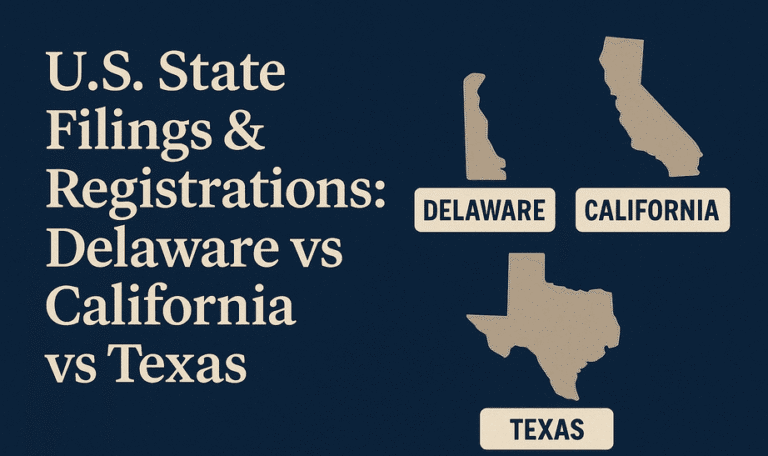
Expanding into the American market offers Indian entrepreneurs immense opportunities, but success requires more than just a strong business idea. One of the most critical factors is navigating U.S. compliance and licensing essentials, a process that ensures your business operates legally and builds credibility in a highly regulated environment. Understanding the U.S. Regulatory Landscape The United States has a complex legal system with regulations at the federal, state, and local levels. Unlike India, where many business laws are centralized, U.S. requirements often vary across states and even cities. For example, a business incorporated in Delaware may face different compliance obligations compared to one operating in California or Texas. Key areas to be aware of include: Essential Business Licenses and Permits Almost every business in the U.S. requires some form of license or permit to operate legally. The nature of your business, whether it’s IT services, food and beverage, retail, or consulting, will determine the type of license you need. Indian entrepreneurs should conduct a state-by-state review to ensure no critical license is overlooked. Online resources from the U.S. Small Business Administration (SBA) and Secretary of State websites are a good starting point. Additionally, consulting a local business attorney can save time and prevent costly mistakes during the registration phase. Compliance Beyond Licensing Licensing is just the beginning, ongoing compliance is essential to maintain business credibility and avoid legal setbacks. Some crucial aspects include: Final Thoughts For Indian entrepreneurs eyeing U.S. expansion, compliance and licensing should never be treated as a formality. They form the foundation of a legally sound and trustworthy business. The key lies in understanding federal, state, and local requirements, securing the right licenses, and maintaining ongoing compliance. While the process may seem overwhelming, it also creates opportunities showing investors, partners, and customers that your business is serious, credible, and built to last in one of the world’s most competitive markets. With the right legal guidance and proper planning, Indian entrepreneurs can confidently turn their American dream into a sustainable success story. Ritu

How to Set Up an Indian Subsidiary as a Foreigner: A Complete Legal Guide

How to Set Up an Indian Subsidiary has become a key consideration for global investors and companies as India emerges as a preferred destination for establishing a long-term presence in Asia. With its steadily growing economy, business-friendly reforms, expanding consumer base, and a highly skilled workforce, India presents a unique mix of opportunity and stability. For many foreign businesses, setting up a fully functional subsidiary offers greater strategic control, operational autonomy, and legal advantages compared to distributorships, franchises, or liaison offices. A subsidiary in India refers to a company incorporated under the Companies Act, 2013, with foreign ownership—either as a Wholly Owned Subsidiary (WOS), where 100% shares are held by the foreign parent company, or a Joint Venture (JV), where ownership is shared with Indian individuals or entities. Regardless of shareholding pattern, once incorporated, the subsidiary is treated as an Indian company. It acquires an independent legal identity, pays taxes as a resident Indian entity, can hold assets, enter into contracts, hire employees, sue or be sued in its own name. Understanding India’s FDI Framework Foreign investment into India is primarily governed by the Foreign Exchange Management Act, 1999 (FEMA) and the Consolidated FDI Policy released by the Department for Promotion of Industry and Internal Trade (DPIIT). Investment entry routes are broadly categorized into two: Many sectors—like IT services, software development, consulting, manufacturing, and single-brand retail (subject to conditions)—allow 100% FDI under the automatic route. However, critical and regulated sectors like defence, print media, telecom, and multi-brand retail require government approval or have sectoral caps. It’s important to identify which route applies to your business before moving ahead. Every FDI inflow must comply with valuation norms, FEMA pricing guidelines, and must be reported to the Reserve Bank of India (RBI) via its FIRMS portal within the prescribed timelines. Delayed or inaccurate filings may lead to penalties or regulatory scrutiny. Legal and Structural Prerequisites for Incorporation The most commonly preferred structure for foreign subsidiaries is the Private Limited Company, offering limited liability protection, strong credibility with stakeholders, and flexibility in management. The incorporation process is entirely digital, managed by the Ministry of Corporate Affairs (MCA) through the SPICe+ (Simplified Proforma for Incorporating Company Electronically Plus) system. Key incorporation requirements include: The name of the proposed company must follow the naming guidelines and should not resemble existing company names or trademarks. The name is first reserved through Part A of the SPICe+ form. Upon name approval, Part B of the SPICe+ form is used to upload the following key documents: Post verification, the MCA issues the Certificate of Incorporation along with a Corporate Identification Number (CIN). Simultaneously, the entity is allotted a PAN, TAN, and can optionally register for GST, ESIC, and EPFO. Capital Infusion and RBI Compliances There is no minimum capital requirement for private limited companies in India. However, once the bank account is set up, the foreign investor must remit the share capital via a recognised banking channel. Upon receiving the funds, the company must issue share certificates to the shareholders and file Form FC-GPR within 30 days of share allotment through the RBI FIRMS portal. Compliance with FEMA’s pricing guidelines is crucial. Share valuation must be based on internationally accepted pricing methodologies (typically DCF or NAV-based methods), and documentation must be accurate and timely. Errors, omissions, or delays can result in penalties and affect future remittances or repatriations. Post-Incorporation Legal Obligations Setting up the company is just the first step. Maintaining compliance is an ongoing responsibility. Immediately after incorporation and capital infusion, the company must: Neglecting post-incorporation compliance can lead to heavy penalties, disqualification of directors, and loss of credibility. Taxation and Transfer Pricing Guidelines An Indian subsidiary is taxed as a domestic entity. The base corporate tax rate is 22%, subject to applicable surcharge and cess, provided no special deductions or incentives are claimed. New manufacturing companies or startups registered under government schemes may be eligible for lower tax rates, sometimes as low as 15%. All transactions between the Indian subsidiary and its foreign parent or group entities fall under transfer pricing regulations. These must be conducted at arm’s length pricing and backed by detailed documentation. Tax authorities in India are especially vigilant about pricing of inter-company services, royalties, and intra-group transactions. Dividends declared by the subsidiary are taxed in the hands of the foreign shareholder, and withholding tax applies depending on the nature of payment and the Double Taxation Avoidance Agreement (DTAA) between India and the foreign country. Repatriation of Funds and Exit Strategies Profits, dividends, royalties, and other legitimate payments can be freely repatriated, subject to compliance with FEMA and applicable taxation. Dividend payouts must be after the deduction of applicable withholding taxes and must follow RBI’s guidelines. When it comes to exiting the investment, foreign shareholders may: In each of these options, fair valuation, tax implications, regulatory approvals, and timelines must be closely examined. Key Mistakes to Avoid Setting up a subsidiary involves navigating multiple layers of regulation. Common pitfalls include: These mistakes can cause significant delays, invite scrutiny, or even result in penalties. Partnering with seasoned legal, tax, and compliance professionals from the beginning helps avoid costly errors. Conclusion Setting up a subsidiary in India is a rewarding long-term strategy for foreign companies aiming to participate meaningfully in one of the world’s fastest-growing economies. While the process involves multiple legal steps and regulatory filings, the country’s digital governance reforms have made it far more transparent and streamlined than before. With careful planning, sectoral due diligence, and expert guidance, a foreign company can not only enter the Indian market smoothly but also build a scalable, compliant, and profitable business that taps into India’s vast economic potential. A properly structured Indian subsidiary is more than just a local branch—it’s a gateway to sustained growth, innovation, and impact in the Indian business landscape. juris consultants shubham Agarwalwww.jurisconsultants.in

5 US Incorporation Mistakes Global Entrepreneurs Must Avoid

5 US Incorporation Mistakes Global Entrepreneurs Must Avoid” is more than just a cautionary list it’s a wake-up call for those eyeing the US as their next big move. The US is still seen as the ultimate benchmark for identifying a business as a global initiative. For many with international ambitions, it represents the ultimate prize. a dynamic market, lucrative consumer base, and undeniable allure. However, navigating this geography is highly complex. We learn mostly from our mistakes, but a few are simply non-negotiable. Here are the top 5 mistakes that entrepreneurs make while expanding their business to the US and how you can avoid them. Mistake 1- Choosing the Wrong Business Structure  While there are various structures of businesses available, for a Non-Resident, the US has two business entities to offer-  (i) LLC- Limited Liability Company (ii) C-corp- C- Corporation While both offer their separate conveniences, choosing the right one as per your business needs is necessary.  Not all the time an LLC will help you thrive and not all the time it is the best worst possible way out.  An LLC is very similar to an LLP in India, While a c-corp is a separate legal entity.  Your business needs attention, book a free consultancy to know more about choosing the right structure. Mistake 2- Underestimating the Importance of Local Presence Expanding your business to the US? Then why do you want to stay limited to a paper company? Many founders overlook the idea of having a physical presence. It is something that makes the company credible in the eyes of customers, vendors, or investors.  For a matter of fact, even vendor-onboarding requires a local presence? Would you really want to miss that opportunity? Not having a presence on the US soil can result in- Delayed client onboarding, no virtual as well as physical payment address or bank account and maybe catching the chargebacks as a sham company. Along with that, having a visible (physical) presence can also help you achieve local networking. And now as Indians, no one knows the value of the local network more than we do.  Pro Tip– A physical office and a U.S. phone line can do wonders to your business.  Call us now to get a physical address at the ease of a few dollars.  P.S. we not only give you an address, but we give you a shelter in rain- our on-ground support is unbeatable.  If you want to read more on Physical Presence, read out our next blog- (blog on local nexus) Mistake 3- Ignoring the Tax Complexity Unlike India, each state in the US has its own tax structure. You may owe different taxes in different states.  Some states do not have any state income tax, while some charge hefty amounts.  Understanding this can be very complex, but then you are a business owner, your job is to help the business flourish, our job is to support you with that.  Here are a few tips you can keep handy as an Indian Citizen running your business in the US: DTAA- India and US have signed a treaty called Double tax Avoidance Agreement. Taking advantage of this,once you have paid the taxes, you may not have to pay the taxes again in your home country.  Franchise Taxes- Also called privilege tax, is charged by some states in the US, irrespective of your annual income. It is advised, while choosing to run the business in initial days, you pay attention to these minute details.  To read more on US Taxation, visit this- (blog on taxation) To get your queries addressed, reach out to us here. Mistake 4- Poor Banking and Payment Setup For the ease of opening it, people often mistake virtual bank accounts as their go to solution. While it may look lucrative in the beginning, it might not be the best idea for your business.  Along with that, be it virtual or physical, both require physical presence in the US, so why not go with a physical bank account and initiate the golden era of our business.  Physical banking definitely comes with its many benefits- ease of transaction being one of them. Of course, traditional banking always wins. A virtual bank- driven by technology might get shut at any moment, all your funds frozen right there. You may think that this blog is to scare us, but trust us, there have been numerous instances where virtual banking failed the idea of ease of doing business. Let us know if you need any help with your banking, and we will be happy to assist you.  Mistake 5- Failing to Protect Intellectual Property Neglecting intellectual property will not only open doors for the thieves, but will also bring disgrace to your brand goodwill- which you have built with sweat and labor. Registering your trademarks and patents is non-negotiable for safeguarding your innovation, your good will and your business.  US IP Law favors the first to file, not the first to use. Without protection, you are risking your brand identity. Do you want that? We believe the answer to that is a straight no.  To avoid this, along with registering your Intellectual Property, it is advised that you start signing NDAs and adding IP clauses in your agreements.  We as Consultants not only help you set-up your company, but we also give you end-to-end services. Let us know your willingness to save your Intellectual Property, and we will be there assisting you with it.  Conclusion Our job is not to just launch the business, but also to promote and help it run safely in the long run. Because owning a great service or product might not be the key to success- you need to give close attention to the process involved. And while you are too busy running the business, let us give you the backend support required to enter the flourishing era. Let’s stop blindly following the “Wyoming LLC in 24 hours” and start taking informed decisions about the right..

The Tax Games: May the Deductions be in your favor

The Tax Games are real — even after successfully launching your business in the US, you’re still wrestling with taxes, aren’t you? Let’s face it — whether you’re a startup tech founder or running a BPO offshore, taxation isn’t optional; it’s essential for survival. Juggling between State Taxes, Federal Taxes, and then Trump throwing tantrums on top of everything? Let us help you navigate the chaos. Understanding the Basic Tax Structure The United States is a Federal Country, which means every State is a mini-country in its own under the umbrella of the US, hence the name- United States of America.  But what does a mini country and an umbrella country exactly mean here? So, in a lay person’s language, we are supposed to pay taxes to two separate entities- to the Federal, i.e. the IRS (the one which issued your EIN- yes, that only), and then to the State, also known as SALT (State and Local Taxes).  (i) Federal Taxes-  Corporate entities are taxed at flat 21%, which means whatever your profit is, you are supposed to pay 21% of it to the IRS ( which stands for Internal Revenue Service). Non-negotiable.  (ii) State Tax- On the State level, each state has its own Taxation policies- some charge state corporate income tax, some don’t. Other than that, some states also levy local taxes like:- Choosing the right business structure Choosing the right business entity can change the way you are going to be taxed. LLC- a form of partnership, partners are taxed on their personal filing.  While in a C-corporation, the company is a separate legal entity, all the taxation is dealt separately for the Company, you as an individual do not have to file individual returns.  As a foreigner in the US, it is advised that you establish a C-corp, not only for the taxation, but for other purposes as well.  To know more about LLC vs C-corp, read our blog- (backlink to llc vs c-corp) The forms- Compliance and how to avoid chargebacks Having a business in the US is a dream for many, and is appreciated as the benchmark of global expansion. And it is not solely because America is rich, but because it has one of the strictest compliance structures, which if failed, attract huge chargebacks.  Lets discuss two of the crucial forms required to be filled by you as a Non-resident business owner.  (i) Form 5472- Required for an entity owned by foreign individuals, with 25% or more stake in the company. The main purpose of Form 5472 is for the government to monitor the flow of transactions between reporting entities and related parties. This ensures compliance with U.S. tax laws and helps combat financial crimes like money laundering and tax evasion. Failure to do so can invite chargeback of $25,000 (ii) Form W-8BEN- for declaration of your foreign status to avoid unnecessary withholding. (iii) State Tax Filings- Most states require an annual return or franchise tax filing, even if you have generated no revenue. Myth– Assuming no revenue means no filing Fact– Foreign owned entities have filing mandates regardless of activity or profit. The IRS believes that silence is guilt. Hence, even if you ‘did not do any business- generated no profit’ you may still need to file. Common Mistakes Even full-grown businesses sometimes commit certain mistakes which attract huge chargebacks, leaving them to wonder- ‘what did I do wrong’ (i) Missing treaty benefits-  Tax Treaties like DTAA can reduce or eliminate double taxation- if you claim them properly (ii) Ignoring State Filings-  In certain states you may still owe franchise tax. Apart from that, you need to maintain registered agent compliance.  (iii) Trying to DIY it all Hiring a professional can reduce your burden immensely and add up to your gross profits in huge amounts. Trying to maintain tax and accounts would end up mixing your personal and professional finances, making the scenario even more complicated (as if the US Taxation is not complex enough). Conclusion Yes, U.S. taxation is complex. But it’s not something out of this world. With the right structure, filings, and strategy, you can legally minimize taxes, maximize profit, and run your business with confidence. Taxes aren’t just about paying- they’re about planning, which is why we offer you efficient Tax Planning services, to know more, reach out to us. So along with your Hard work, let’s bring our Smart work on the table, and help you take your hard-earned money, to your home country, with least possible deductions.  As always: May the deductions be in your favor.  Radhika Sharma

India FDI Limits & What You Can Invest In

India FDI limits have become a focal point for global investors as the country emerges as a compelling destination for foreign investments. Owing to its rich cultural diversity and flourishing industries, India’s swiftly growing economy and varied cultural landscape offer numerous opportunities for investors eager to explore new markets. As India progresses in liberalizing its economy and opening various sectors to international participants, grasping the limits of Foreign Direct Investment (FDI) becomes essential for anyone considering investment in this region. This article aims to provide comprehensive insights into FDI in India—from entry pathways and sector-specific limits to compliance obligations and potential advantages. Whether you are an entrepreneur or an investor examining India’s dynamic market environment, this guide will assist you in navigating your investment journey with assurance. What is FDI? Foreign Direct Investment (FDI) refers to the investment made by an individual, company, or entity based in one country into the business or capital of another country — typically by acquiring ownership, control, or a lasting interest in a local enterprise. This type of investment usually involves acquiring significant stakes, establishing subsidiaries, or forming joint ventures in the host country. As per Foreign Exchange Management Act, 1999 (FEMA), FDI means investment through capital instruments (such as equity shares, convertible debentures, preference shares, etc.) by a person resident outside India in an unlisted Indian company or in 10% or more of the post-issue paid-up equity capital of a listed Indian company. Note:- In case an existing investment by a person resident outside India in capital instruments of a listed Indian company falls to a level below ten percent, of the post issue paid-up equity capital on a fully diluted basis, the investment shall continue to be treated as FDI. Explanation: – Fully diluted basis means the total number of shares that would be outstanding if all possible sources of conversion are exercised. FDI Entry Routes FDI in India is allowed through two routes: FDI Limits across Key Sectors (2025) India reviews its FDI policy regularly to keep pace with global trends and domestic priorities. Here is a snapshot of the latest sectoral limits and routes for FDI in 2025: SECTOR FDI LIMIT ROUTE Agriculture (specified activities like horticulture, animal husbandry, plantations) 100% Automatic Airport (Greenfield and brownfield) 100% Automatic Manufacturing 100% Automatic Insurance 100% Automatic Defence 100% Automatic (up to 74%), Government approval + security checks (above 74%) Telecom 100% Automatic (up to 49%), Government approval (above 49%) Pharmaceuticals (Greenfield) 100% Automatic Pharmaceuticals (Brownfield) 100% Automatic (up to 74%), Govt. (above 74%) E-Commerce 100% Automatic Single Brand Retail Trading 100% Automatic (up to 49%), Govt. (above 49%) Multi-Brand Retail Trading 51% Government Approval Private Sector Banking 74% Automatic (up to 49%), Govt. (above 49%) Public Sector Banking 20% Government Approval Civil Aviation 100% Automatic Railways (in select activities) 100% Automatic Construction Development 100% Automatic Real Estate Business (except REITs) Prohibited – Gambling, Betting, Lottery Prohibited – Atomic Energy Prohibited – Sectors where FDI is prohibited Despite the liberal regime, there are areas where FDI is strictly not allowed. These include: Recent Policy Updates The FDI cap in insurance has been raised from 74% to 100% for companies investing their entire premium within India. This move is expected to attract global insurers and boost market competition. The government continues to streamline regulations, decriminalize minor offenses, and roll out digital processes to improve the investment climate. Most FDI now comes through the automatic route, reducing bureaucratic hurdles. Investments from entities in countries sharing a land border with India (e.g., China, Pakistan, and Bangladesh) require prior government approval, regardless of sector or amount. This is a national security measure introduced in recent years. Where Is FDI Flowing? India attracted a record $81.04 billion in FDI in FY 2024–25, with the top recipient sectors being: The leading states for FDI inflows are Maharashtra, Karnataka, and Delhi, with Singapore, Mauritius, and the United States as the top source countries. What Can You Invest In?      Here is a quick guide to sectors open for FDI and their potential: India’s flourishing technology ecosystem permits 100% FDI in software, IT services, and fintech. The government’s initiative for “Digital India” makes this sector particularly appealing. Thanks to the “Make in India” campaign, the manufacturing sector is highly accessible for FDI. Areas such as electronics, automotive, and pharmaceuticals are notably attractive. Single-brand retail: Up to 100% FDI (with conditions). Multi-brand retail: Up to 51% FDI, but subject to government approval and local sourcing requirements. The banking, insurance, and Non-Banking Financial Companies (NBFCs) sectors have experienced liberalization, with insurance now permitting up to 100% FDI for eligible companies. Additionally, FDI up to 100% is allowed under the automatic route in most NBFCs provided they engage in 18 specified activities (such as leasing, asset finance, etc.). 100% FDI is permitted in construction, industrial parks, airports, and certain railway activities, positioning India as an attractive destination for infrastructure investors. Both Greenfield and Brownfield pharma projects are open to substantial FDI limits, with the sector attracting significant foreign interest. 100% FDI is allowed in most agricultural activities (like horticulture, animal husbandry, etc.) and food processing, bolstering India’s food security and export goals.     How to Invest: Steps for Foreign Investors Final Thoughts India’s Foreign Direct Investment (FDI) framework in 2025 is considered one of the most liberal in the world, allowing nearly all sectors to have up to 100% foreign ownership via the streamlined automatic route. Nevertheless, investors should remain aware of specific sector limitations, compliance obligations, and restricted areas. By employing an effective strategy and conducting thorough due diligence, investors can access significant opportunities in one of the fastest-growing economies globally. juris consultants shubham Agarwalwww.jurisconsultants.in

US Bank Accounts from Abroad— A 2025 Guide

Does obtaining a US Bank account from Abroad feel like a far fetched dream? Let’s break it down and bring your dream to reality.  It’s very easy, honestly. Like any bank, even the balls in the US want you to give them an assurance of your legitimacy. Once you check everything off this list, you will have your US bank account in no time.  Any bank account is approved either for an individual or a company. If you are a foreign citizen and wish to open your account in the US, you will have to form a company there. A lot of people will take shortcuts and partner up with a US citizen. Not a great idea, based on their participation in your company, the percentage of revenue you will be sharing with them. There are a few partners who will demand up to almost 30% of your revenue simply to provide their credentials and it’s just not worth it. Why cut your margins when you can do it yourself by registering a company in the US with the help of a registered agent.  Be it a virtual bank account like Mercury or Wise, or a physical account like Bank of America, a physical address is absolutely necessary. Virtual addresses are a thing of the past now, even virtual Banks decline your account request if they find that your address is virtual or a PO Box address. So, availing a physical address in the US is non-negotiable. You need to avail this physical office and have your company registered on this address. If you can google verify this address, then there’s nothing like it.  Not a lot of people will tell you this but your website is also a crucial part of your bank account since it is the face of your company. Since you are not present in the US physically, your website is what actually tells them what it is you do, and how well established you are. As a matter of fact, your website is a very important part of your KYC, so don’t hold back on it.  What type of entity you form determines whether you get an account or not and here’s why. There are some entities that require you to be physically present in the US in order to open an account. There are others that do not require your physical presence in the US. Everyone knows what a struggle US immigration is, and getting your Visa and going to US is not as easy as it may seem, this option is not feasible and simply does not help our pain point here, which is to get US Bank accounts from Abroad, from the comfort of your own home. In order to find out which entity is best suited for your business, you should seek help from the experts and get a tailor made solution for your needs.  Things to keep in mind:  Put this in pointers: A bank account might not be enough for a lot of businesses. If you wish to accept payments from your clients, you will have to give them as many modes of payments as possible. This includes Credit card, Debit card, Apple Pay and many more, and in order to accept these, you require Merchant services and payment gateways. So it is best to get your business plan overviewed by experts who can always tell you what is the best way to proceed. Do not follow the market trends blindly, every business needs its own strategy.  Online platforms will have you believe that the company you formed for $300 dollars, in a random state without thinking twice is going to run effortlessly till the end of times. I hate to break it to you, that’s not gonna happen, forming and running a company takes a lot of thought and effort but the right people can make it easy for you. Do not let all the information you see on the internet overwhelm you, if you are equipped with the right information, then it’s a piece of cake.  Conclusion Opening a US bank account from abroad isn’t a dream—it’s a strategic process that becomes simple with the right guidance. Avoid shortcuts, stay compliant, and build a strong foundation for your business. With expert support and the right setup, you can confidently go global from your own home. juris consultants Sushmitaa Patil

GET IN TOUCH

Let's Get Started with Us, For Further Info.

Contact Us

    ©2023. All Rights Reserved.