
Author: shradha chhatre

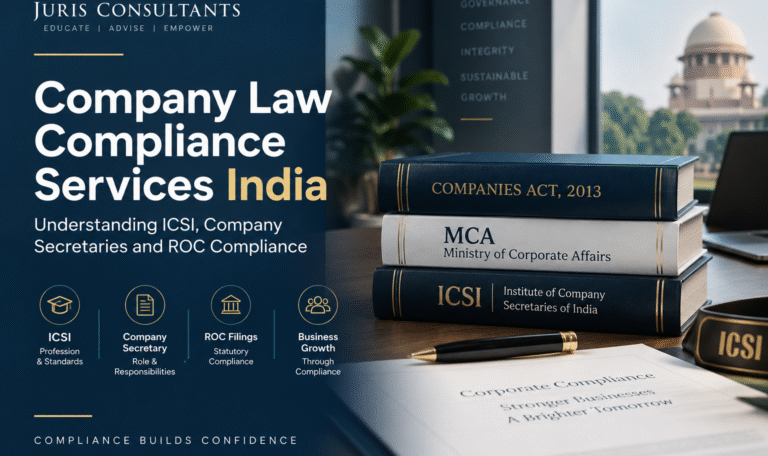
Company Law Compliance Services India: Understanding ICSI, Company Secretaries and ROC Compliance

Most founders do not think about compliance until it becomes urgent. A due diligence request, a bank loan application, a funding round, or a requirement to update company records can quickly expose gaps in statutory filings and documentation. These situations are avoidable when businesses maintain their company law compliance on a regular basis. Keeping statutory records, registers, board documentation, and required filings up to date makes compliance part of normal business operations rather than an emergency exercise. The Institute of Company Secretaries of India (ICSI) plays an important role in developing and regulating the Company Secretary profession in India. Understanding the role of ICSI, the responsibilities of a Company Secretary, and the importance of ongoing compliance can help growing businesses make better decisions about their statutory obligations. Why Company Law Compliance Services India Are Important When a company is incorporated under the Companies Act, 2013, its compliance responsibilities do not end with registration. Companies have continuing obligations toward the Ministry of Corporate Affairs (MCA). These obligations can include: Failure to meet applicable requirements can result in additional government fees, penalties, and other regulatory consequences. In certain circumstances and depending on the nature of the default, directors may also face personal consequences. This is why company law compliance services in India are more than an administrative function. Proper compliance can help businesses demonstrate that they maintain their statutory responsibilities to investors, lenders, and potential business partners. A business with organized records and a consistent compliance history may also be better prepared for due diligence, financing discussions, and other important corporate events. What Is the Institute of Company Secretaries of India (ICSI)? The Institute of Company Secretaries of India (ICSI) is the professional body responsible for developing and regulating the Company Secretary profession in India. ICSI is involved in areas such as: The institute helps establish the professional framework within which Company Secretaries provide governance and compliance support to Indian companies. For businesses, this means that a Company Secretary working internally or through a professional service provider operates within professional standards established by ICSI. What Does a Company Secretary Do? The role of a Company Secretary extends beyond preparing documents. A Company Secretary can assist a company with corporate governance, statutory compliance, and regulatory documentation. Depending on the company’s requirements, responsibilities may include: For many small and medium-sized businesses, hiring a full-time Company Secretary may not always be the preferred approach. Company secretarial services in India can provide businesses with professional compliance support without necessarily requiring a full-time internal resource. The appropriate arrangement depends on the company’s structure and applicable legal requirements. What Is ROC Compliance? The Registrar of Companies (ROC) is an important part of India’s corporate regulatory framework. ROC-related compliance can include annual filings, financial statement filings, director KYC requirements, and event-based filings when certain changes occur. Examples of events that may require corporate filings include: Keeping track of these requirements is important because late filings can result in additional government fees and may create compliance gaps. Reliable ROC filing services in India can help businesses monitor applicable deadlines and maintain their filing records. Company Law Compliance for Small Businesses in India Startups and small businesses often prioritize growth, sales, hiring, and fundraising while treating compliance as something that can be handled later. This can create unnecessary problems. Even smaller private companies can have continuing statutory obligations. Attempting to catch up on several years of filings and corporate records can be considerably more complicated than maintaining compliance from the beginning. Founders can reduce this administrative burden by establishing basic compliance processes early, including: A consistent compliance process can also make future fundraising, due diligence, financing, or acquisition discussions more organized. How Professional Compliance Consultants Can Help Managing corporate compliance can become difficult when multiple filing deadlines, documents, and regulatory requirements need to be monitored simultaneously. Professional company law and secretarial compliance services can help businesses create a structured compliance process. Depending on the company’s needs, professional support may include: A well-managed compliance process reduces dependence on someone simply remembering deadlines manually. Because MCA rules, forms, and requirements can change, periodic professional review can also help businesses identify requirements that may otherwise be overlooked. Common Business Compliance Mistakes to Avoid Businesses of different sizes can encounter similar compliance problems. Some common mistakes include: 1. Missing filing deadlines Late filings can result in additional costs and create unnecessary compliance issues. 2. Failing to maintain proper records Corporate decisions, meetings, registers, and statutory documentation should be maintained appropriately. 3. Relying on verbal board decisions Important corporate decisions should be properly documented rather than relying only on verbal discussions. 4. Treating compliance as an annual activity Not every compliance requirement is annual. Some obligations are event-driven, meaning they can arise when a company takes a particular action or experiences a specific change. 5. Delaying compliance until a transaction is approaching Trying to correct several years of records before a funding round, acquisition, loan, or due diligence exercise can create unnecessary pressure. A continuous compliance approach is generally more organized than treating compliance as an emergency task. Company Secretary vs Company Director: What’s the Difference? Although Company Secretaries and Company Directors both play important roles in corporate governance, their responsibilities are different. Responsibility Company Secretary Company Director Governance oversight Advises on and documents governance practices Sets strategic direction and approves policies Statutory compliance Manages day-to-day compliance execution Ultimately accountable for compliance outcomes ROC filings Prepares and files applicable statutory forms Signs off on filings as an authorized signatory where applicable Board meetings Schedules, documents, and maintains minutes Attends, deliberates, and votes on resolutions Statutory records Maintains registers and secretarial records Reviews and relies on records for business decisions Decision-making Provides procedural and regulatory guidance Makes final business and strategic decisions Legal accountability Professionally accountable for compliance accuracy May be personally liable for certain statutory defaults, depending on the circumstances The exact responsibilities and legal obligations can vary depending on the company’s structure and the applicable provisions of law. Frequently Asked Questions About Company Law..

How to Choose a Legal and Tax Advisor for Your Business

Choosing the right legal and tax advisor for your business can help you avoid costly compliance mistakes, manage risk, and make better decisions as your company grows. Whether you are launching a startup, preparing for fundraising, expanding into new markets, or managing ongoing compliance, the right professional support can make a significant difference. Why Does Your Business Need a Legal and Tax Advisor? Many founders look for a legal or tax advisor only when a problem arises. This could be a funding round that requires a shareholder agreement, a compliance notice that needs immediate attention, or an ESOP plan that has not been properly documented. Waiting until these situations occur can lead to rushed decisions and unnecessary costs. As a business grows, the consequences of compliance mistakes can also become more serious. A delayed ROC filing may be manageable during the early stages but could create complications during investor due diligence or a funding round. A reliable legal and tax advisor for business can help with: The goal is not simply to find the most expensive advisor. It is to find a professional whose expertise matches your business stage and requirements. Legal Advisor vs Tax Advisor: What Is the Difference? The terms lawyer, Chartered Accountant, Company Secretary, tax consultant, and business consultant are sometimes used interchangeably. However, each professional has a different area of expertise. Corporate Lawyer A corporate lawyer can help businesses prepare and negotiate contracts, shareholder agreements, corporate documentation, regulatory matters, and dispute-related issues. Chartered Accountant A Chartered Accountant, or CA, generally handles areas such as accounting, financial statements, audits, tax filings, and financial compliance. Company Secretary A Company Secretary, or CS, focuses on corporate law compliance, including statutory filings, board documentation, shareholder matters, and other company law requirements. Tax Consultant A tax consultant specializes in tax planning, tax compliance, and related direct or indirect tax matters. Intellectual Property Professional An IP professional can assist with trademarks, patents, copyrights, designs, and intellectual property protection. Understanding these differences helps business owners select the right professional instead of paying for expertise they do not currently need. Law Firm vs Online Compliance Platform One common question among startup founders is whether they should hire a law firm or use an online compliance platform. There is no single answer. The right choice depends on the complexity and stage of your business. An online compliance platform can be useful for routine registrations, basic filings, and standardized compliance requirements. These services can offer predictable processes and lower costs for straightforward requirements. A law firm may be more appropriate when your business needs customized legal advice, contract negotiation, shareholder agreements, fundraising support, dispute assistance, or complex corporate structuring. In many cases, businesses use both. A startup may begin with an online platform for routine compliance and later engage a law firm when its legal requirements become more complex. Questions to Ask Before Hiring a Legal or Tax Advisor Before signing an engagement with an advisor, ask clear questions about their expertise, pricing, communication, and scope of work. Consider asking: The answers can help you evaluate whether the advisor is a suitable long-term partner. Corporate Legal, Tax and IPR Terms Every Founder Should Know A basic understanding of corporate, tax, and intellectual property terminology can make conversations with professional advisors much easier. This corporate legal tax IPR glossary India covers some common terms founders should understand. FEMA The Foreign Exchange Management Act (FEMA) regulates certain foreign exchange transactions and foreign investment activities involving India. NCLT The National Company Law Tribunal (NCLT) is a specialized forum dealing with various matters relating to company law and insolvency proceedings. SAT The Securities Appellate Tribunal (SAT) hears appeals against certain orders issued by securities market regulators such as SEBI. ROC and MCA The Registrar of Companies (ROC) is responsible for receiving statutory company filings. The Ministry of Corporate Affairs (MCA) oversees India’s corporate regulatory framework and the ROC system. DIN A Director Identification Number (DIN) is a unique identification number associated with a director of a company. DSC A Digital Signature Certificate (DSC) is used for digitally signing certain documents and filings submitted to government authorities. GST Goods and Services Tax (GST) is an indirect tax applicable to the supply of goods and services under India’s GST framework. TDS Tax Deducted at Source (TDS) requires tax to be deducted from certain payments and deposited with the government as prescribed by applicable tax rules. ESOP An Employee Stock Option Plan (ESOP) allows eligible employees to receive options to purchase shares of a company, subject to the applicable terms and legal and tax requirements. IPR Intellectual Property Rights (IPR) protect creations such as trademarks, patents, copyrights, and designs. Businesses should consider IP protection early, particularly when developing a brand, product, or technology. This startup legal terms glossary provides only a basic introduction. Businesses should seek professional advice when specific legal, tax, or regulatory decisions are involved. Common Mistakes Businesses Make When Choosing an Advisor Businesses often make avoidable mistakes when selecting professional advisors. Choosing an Advisor Based Only on Price The cheapest provider may not have the expertise your business requires. At the same time, paying for specialized expertise that you do not need may unnecessarily increase costs. Waiting Until There Is a Problem Establishing a relationship with an advisor before a compliance issue or funding round can give your business more time to prepare. Choosing a Generalist for a Specialized Requirement A general business consultant may not be the right professional for specialized areas such as intellectual property protection, corporate restructuring, or cross-border transactions. Not Having a Clear Engagement Letter An engagement letter should clearly define the scope of work, fees, responsibilities, timelines, confidentiality requirements, and procedures for additional work. Not Discussing Communication Expectations Response times, points of contact, and communication methods should be established before the engagement begins. How to Build a Long-Term Advisory Relationship Your business needs can change significantly as the company grows. A startup may initially need help with incorporation, tax registration, and routine compliance. Later,..

How to Draft a Shareholders Agreement That Prevents Future Disputes

A shareholders agreement is designed to establish clear rules for shareholders and reduce the risk of disputes before they arise. For founders, investors, and growing companies, a well-drafted agreement can clarify what happens when a shareholder wants to exit, when shareholders disagree, or when the company needs additional funding. Many founders use generic templates when starting a business because they want to control costs. However, a template may not address the specific ownership structure, business model, funding arrangements, or future risks of a company. That is why drafting a shareholders agreement carefully at the beginning can be far more effective than trying to resolve disagreements after they become formal disputes. A corporate litigation lawyer in India can help founders identify potential areas of conflict and build appropriate mechanisms into the agreement before problems arise. What Is a Shareholders Agreement? A shareholders agreement is a contract between the shareholders of a company that sets out their rights, responsibilities, obligations, and arrangements concerning the company. It can address matters such as: The Companies Act and the company’s articles of association provide the basic legal framework for corporate governance. However, shareholders may also require specific contractual arrangements dealing with founder relationships, investment terms, exits, and other commercial matters. A carefully drafted agreement can therefore reduce uncertainty and provide a clear process when shareholders disagree. What Is a Shareholders Agreement Meant to Prevent? Founders often create a company with a shared vision. However, circumstances can change as the business grows. For example: These questions may seem hypothetical when a company is first established. However, addressing them in advance can prevent uncertainty from becoming a commercial dispute. The purpose of a shareholders agreement is not to eliminate every disagreement. Instead, it provides a framework for dealing with foreseeable disagreements in a structured manner. Why Generic Shareholders Agreement Templates May Fall Short A generic template may cover basic ownership and governance provisions, but it may not reflect the actual risk profile of a particular business. For example, a company with two equal founders may require a detailed deadlock mechanism. A startup with one controlling founder and several investors may need provisions dealing with minority rights, preferred terms, board representation, and investor protections. Similarly, the agreement for a closely held family business may look very different from the agreement used by a venture-backed startup. Therefore, treating a shareholders agreement as a document that simply needs to be signed and filed away can create problems later. The agreement should reflect the company’s: Important Clauses in a Shareholders Agreement The most effective shareholders agreements address the situations that are most likely to create disagreement. 1. Exit and Buyout Mechanisms One of the most important issues to address is what happens when a shareholder wants to leave the company. A well-drafted agreement can establish: Without a clear mechanism, the departure of one shareholder can quickly become a dispute over valuation. By establishing the process in advance, shareholders have a defined framework to follow when an exit occurs. 2. Deadlock Resolution Deadlocks can become particularly difficult when shareholders have equal or substantially equal ownership. For example, two founders may disagree about: If neither shareholder has sufficient voting power to resolve the disagreement, the company’s decision-making can become paralysed. A shareholders agreement can include a deadlock resolution mechanism. Depending on the circumstances, this may involve: The mechanism should be selected carefully based on the company’s ownership structure and commercial requirements. 3. Drag-Along and Tag-Along Rights Share transfers can create significant issues when majority and minority shareholders have different objectives. A drag-along right can allow qualifying majority shareholders to require minority shareholders to participate in a sale of the company, subject to the agreed terms. A tag-along right, on the other hand, can protect minority shareholders by allowing them to participate in a sale when majority shareholders sell their shares to a third party. These provisions can help provide clarity during a future sale or investment transaction. The exact drafting of these clauses is important because the rights, thresholds, notice requirements, and transaction terms should be clearly defined. 4. Dispute Resolution Clause The dispute resolution clause deserves particular attention. A vague clause referring only to “arbitration in Delhi,” for example, may leave important questions unanswered. A carefully drafted clause should consider matters such as: A properly structured dispute resolution mechanism can reduce uncertainty if a disagreement eventually becomes a formal dispute. An arbitration lawyer in India can assist companies in structuring dispute resolution provisions that are appropriate for their particular arrangements. Common Mistakes Founders Make When Drafting a Shareholders Agreement Even when founders understand the importance of having an agreement, several drafting mistakes can create problems later. Signing the Agreement Before the Cap Table Is Finalised An agreement drafted before a funding round is completed may require significant changes once new investors enter the company. New investors may negotiate: If these provisions are introduced after the original agreement has already been signed, the company may end up with multiple amendments that are difficult to reconcile. It is generally better to ensure that the shareholders agreement reflects the company’s actual ownership and investment structure. Treating Confidentiality and Restrictive Covenants as Boilerplate Confidentiality provisions can be important when founders and shareholders have access to commercially sensitive information. However, restrictive covenants, including non-compete provisions, require careful drafting because their enforceability can depend on the wording, circumstances, and applicable Indian law. A provision that is excessively broad may create enforceability concerns. The objective should therefore be to draft restrictions carefully and in a manner appropriate to the company’s circumstances rather than simply inserting a generic clause. Failing to Address an Inactive Shareholder A founder may stop actively contributing to the company while retaining a substantial equity interest. This can create significant tension among the remaining founders. Depending on the company’s structure and applicable arrangements, the agreement may address this through mechanisms such as: These provisions should be drafted carefully because they can have significant commercial and legal consequences. What Happens When a Shareholder Dispute Still Occurs?..

How to Renew a Trademark Registration in India

A trademark is not a “file and forget” asset. Once registered, a trademark in India is generally protected for 10 years, after which it must be renewed to maintain protection. For businesses, a trademark can represent years of investment, customer recognition, and brand reputation. Missing a renewal deadline can therefore put valuable brand protection at risk. In this guide, we explain how to renew a trademark registration in India, when you should apply, what happens if you miss the deadline, and why professional assistance can help businesses manage their trademark portfolio effectively. Why Is Trademark Renewal Important? A registered trademark gives its owner legal protection over the mark in connection with the goods or services for which it is registered. However, this protection is not indefinite. A trademark registration in India generally needs to be renewed every 10 years. If the trademark is not renewed within the prescribed period, it may eventually be removed from the Trademark Register. This can create unnecessary risks for a business, particularly if another party attempts to register or use a similar mark. For this reason, trademark renewal should be treated as an important part of ongoing trademark compliance. Key benefits of timely renewal include: For businesses that have invested heavily in developing their brand identity, timely renewal is an important preventive step. When Does a Trademark Registration Need to Be Renewed? Under Indian trademark law, a trademark registration is generally valid for 10 years from the date of application and can be renewed for further periods of 10 years. Trademark owners should therefore identify the renewal date well in advance. The Trademark Registry may issue a reminder before the registration expires. However, businesses should not depend solely on receiving a reminder. Contact details may change, notices can be overlooked, and internal responsibility for intellectual property matters can shift over time. A better approach is to maintain an internal trademark calendar and record: This becomes particularly important when a business owns several trademarks across different classes. How to Renew a Trademark Registration in India The Trademark Registration process for renewal is generally more straightforward than the process of obtaining a new registration. The following steps provide a general overview. 1. Check the Trademark Registration Details Before filing for renewal, verify the trademark’s: This helps identify discrepancies that may need to be addressed before or during the renewal process. 2. File Form TM-R Trademark renewal is generally carried out by filing Form TM-R with the Indian Trade Marks Registry. The application can be filed through the applicable IP India filing system or through the prescribed filing mechanism. The application should contain accurate details of the registered trademark and proprietor. 3. Pay the Applicable Government Fee The prescribed trademark renewal fee must be paid along with the application. The applicable fee can depend on factors such as: Because government fees and filing procedures can change, applicants should verify the current fee schedule applicable at the time of filing rather than relying on outdated figures. 4. Renewal by the Trademark Registry Once the renewal application and applicable fee have been submitted, the Trademark Registry processes the request. Unlike a new trademark application, a routine renewal generally does not involve repeating the entire examination and publication process associated with the original registration. Once renewed, the trademark can continue for another 10-year period, subject to the applicable law and renewal requirements. What Happens If You Miss the Trademark Renewal Deadline? Missing the original renewal deadline does not necessarily mean that the trademark is immediately lost. Indian trademark law provides mechanisms for renewal after expiry, subject to the applicable statutory period and additional fees. Therefore, if a trademark has already expired, the owner should act promptly rather than assuming that the registration is permanently lost. However, allowing the registration to lapse can create additional complications and costs. Why delayed renewal can be risky During a period in which the trademark’s registration is not effectively maintained, the business may face increased uncertainty regarding its brand protection. There is also a possibility that another party may attempt to file an application for an identical or similar mark. For an established business, such a situation can lead to unnecessary legal and commercial complications. Can a Removed Trademark Be Restored? In certain circumstances, Indian trademark law provides a mechanism for restoration of a trademark that has been removed from the Register. Restoration is different from ordinary renewal and may involve additional requirements, fees, and scrutiny. The exact procedure and applicable timelines depend on the circumstances of the registration and the relevant provisions in force at the time. Therefore, businesses whose trademarks have already been removed should seek professional advice promptly rather than assuming that restoration will automatically be granted. Trademark Renewal vs. New Trademark Registration It is important to understand the difference between renewing an existing trademark and applying for a new trademark. Trademark Renewal New Trademark Registration Applies to an existing registered mark Applies to a new trademark Generally uses Form TM-R Generally begins with Form TM-A Extends the existing registration Creates a new registration Does not normally repeat the entire examination process Involves examination by the Registry Primarily concerns continuation of protection Requires the complete registration process Generally simpler than a new application Can involve examination, publication and opposition Understanding the distinction can help businesses plan their intellectual property strategy more effectively. Understanding Trademark Registration Cost and Process in India Businesses often search for trademark registration cost and process in India when they are considering brand protection for the first time. The initial trademark registration process generally involves several stages, including: Trademark renewal is different because the mark has already gone through the registration process. However, businesses should remember that trademark protection does not end with registration. Ongoing monitoring, renewal and enforcement are also important components of trademark management. What If There Is a Trademark Objection or Conflict? Trademark-related issues can sometimes go beyond renewal. For example, a business may receive an examination objection, encounter a conflicting trademark application, or face another..

Private Limited Company Registration in India: Step-by-Step Guide 2026

Registering a Private Limited Company in India is one of the most popular ways to establish a legally recognized business. The Ministry of Corporate Affairs (MCA) has simplified the incorporation process through the SPICe+ system, which integrates several registration and incorporation services into a streamlined online process. However, company incorporation involves more than simply submitting an application. Entrepreneurs need to understand the eligibility requirements, documents, digital signatures, company name approval, incorporation forms, fees and post-incorporation compliance. This guide explains the Private Limited Company registration process in India, including the documents required, SPICe+ forms, incorporation steps, fees, post-registration requirements, annual compliance and common mistakes to avoid. What Is a Private Limited Company? A Private Limited Company is a separate legal entity incorporated under the Companies Act, 2013. It is owned by its shareholders and has a separate legal identity from its directors and shareholders. A private company generally: The separate legal identity of the company means that the business can own assets, enter into contracts and undertake legal proceedings in its own name. Why Register a Private Limited Company in India? A Private Limited Company can be suitable for entrepreneurs who want a formal business structure with limited liability and potential access to external funding. 1. Limited Liability Protection One of the major advantages of a Private Limited Company is limited liability protection. The company’s liabilities are generally separate from the personal liabilities of its shareholders. This means shareholders’ personal assets are ordinarily protected from the company’s business debts, subject to applicable law and circumstances. 2. Separate Legal Entity A Private Limited Company has a legal identity separate from its shareholders and directors. The company can: 3. Access to Funding and Investors A properly incorporated company can provide a structured framework for raising capital. Depending on the business and applicable legal requirements, a Private Limited Company may be able to raise equity investment from angel investors and venture capital investors. The structure can also support employee incentive arrangements such as ESOPs, where applicable. 4. Perpetual Succession A company’s existence does not ordinarily end merely because a shareholder or director leaves the business or dies. This provides continuity and can make the structure suitable for businesses with long-term growth plans. 5. Business Credibility Having a registered corporate structure can help establish credibility with customers, suppliers, financial institutions, investors and other business stakeholders. Prerequisites for Private Limited Company Registration in India Before beginning the Private Limited Company registration process, you should ensure that the basic requirements are in place. 1. Directors and Shareholders A Private Limited Company generally requires: Shareholders may be individuals or corporate entities, subject to applicable requirements. Where foreign nationals or foreign entities are involved, additional documentation, notarisation, apostille and other regulatory requirements may apply. 2. Registered Office Address Every company must have a registered office in India. Depending on the circumstances, the registered office may be located at a residential or commercial premises. Appropriate address proof, ownership documents, rent or lease documentation and a No Objection Certificate (NOC) may be required. Documents Required for Private Limited Company Registration The exact documentation can vary depending on the directors, shareholders and registered office. Documents for Indian Directors Commonly required documents include: Documents for Foreign Directors Foreign directors may need: Documents for the Registered Office Common documents include: Providing accurate and consistent documents is important because discrepancies in names, addresses or identification details can result in resubmission or delay. Forms Used for Company Incorporation Several electronic forms are used during the incorporation process. INC-33 – e-Memorandum of Association The e-MoA sets out the company’s objectives and scope of activities. INC-34 – e-Articles of Association The e-AoA contains the company’s internal rules and governance framework. INC-9 – Declaration by Subscribers and First Directors This declaration confirms the relevant statutory information and declarations required from subscribers and first directors. DIR-2 – Consent to Act as Director DIR-2 records the consent of a proposed director to act in that capacity. AGILE-PRO-S The applicable integrated form can be used for certain linked registrations and services, depending on the company’s circumstances and current MCA requirements. Step-by-Step Process for Private Limited Company Registration The Private Limited Company incorporation process in India can be broadly divided into the following steps. Step 1: Obtain a Digital Signature Certificate A Digital Signature Certificate is required for individuals who need to digitally sign the relevant incorporation documents. The DSC is used for submitting electronic forms on the MCA portal. Common documents required for obtaining a DSC may include: Before applying, ensure that the name and identification details on the DSC-related documents are accurate and consistent. Step 2: Apply for Director Identification Number A Director Identification Number (DIN) is a unique identification number associated with an individual who serves as a director. For a new company, DIN can be applied for through the incorporation process, subject to the applicable rules and limits. Existing directors should ensure that their DIN and KYC details are up to date. Step 3: Choose and Reserve Your Company Name Choosing the right company name is an important part of the incorporation process. The proposed name should comply with the Companies Act, 2013 and the applicable incorporation rules. Before submitting the name, check for: A name that is too similar to an existing company, LLP or trademark may result in rejection. Step 4: Prepare and File the Incorporation Application After the company name is approved, the incorporation application and supporting documents can be prepared and submitted through the MCA’s integrated incorporation system. The application generally requires information relating to: Supporting documents must be attached in the prescribed format. Step 5: Pay Government Fees and Stamp Duty The total cost of incorporation depends on several factors, including: Because government fees and stamp duty can change, applicants should verify the applicable charges on the MCA portal before filing. Step 6: MCA Verification and Certificate of Incorporation Once the application is submitted, it is examined by the relevant MCA authorities. If the application and supporting documents satisfy the applicable requirements, the..

IP Protection Services in India: A Practical Guide for Businesses

India’s innovation ecosystem is undergoing a major transformation. The growth of deep-tech startups, global capability centres (GCCs), SaaS businesses and cross-border M&A has made intellectual property (IP) one of the most valuable assets on a company’s balance sheet. For a SaaS company in Bengaluru, a technology manufacturer in Pune, a pharmaceutical business in Hyderabad or a company preparing for a cross-border acquisition, protecting intellectual property is no longer limited to filing a trademark or patent. Businesses increasingly need IP protection services in India that cover the entire lifecycle of an IP asset — from identification and registration to portfolio management, due diligence, licensing, enforcement and commercialisation. The right IP strategy can protect technology, strengthen valuation, reduce infringement risks and support transactions. The wrong approach can create ownership gaps, missed renewals, licensing disputes and problems during fundraising or M&A. This guide explains what to look for when choosing an IP protection consultant in India and how different types of IP service providers compare. What Are IP Protection Services in India? IP protection services help businesses identify, protect, manage and commercially exploit intellectual property. Depending on the business and its industry, these services may cover: For growing businesses, the objective should not simply be to obtain registrations. The larger objective is to build an IP portfolio that supports the company’s commercial and strategic goals. What to Look for in an IP Protection Consultant in India Generic trademark filing services may be sufficient for a straightforward registration. However, technology-driven companies and businesses involved in transactions often require a broader legal and commercial approach. Before selecting an IP protection consultant in India, consider the following areas. 1. IP Due Diligence and Audit A professional IP audit can help identify: This becomes particularly important before a funding round, acquisition, restructuring or sale of the business. 2. Patent, Trademark and Design Prosecution An IP service provider should be able to assist with the relevant registration and prosecution processes. Depending on the business, this may include: India’s Patent Rules also provide an expedited examination route for eligible applicants. Rule 24C includes categories such as startups, small entities and certain female applicants, subject to the applicable requirements. 3. IP Portfolio Management Obtaining an IP registration is only one part of the process. Businesses must also monitor: Effective IP portfolio management in India helps businesses prevent valuable rights from being lost through missed deadlines or inadequate maintenance. 4. Commercialisation and IP Licensing Intellectual property can become a source of revenue. Businesses may commercialise IP through: The relevant agreement should clearly define the rights being granted, territory, duration, exclusivity, royalties, improvements and termination provisions. Types of IP Service Providers in India There is no single model that works for every business. Broadly, businesses can consider three categories of providers. Evaluation Factor Full-Service Corporate Law Firms Boutique IP Practices Tech-Enabled Legal Consultancies Typical clients Large companies, MNCs and complex transactions Startups, technology and IP-intensive businesses Early-stage businesses and routine matters IP due diligence Enterprise-level transaction support Detailed IP audits and FTO analysis Basic searches and clearance Portfolio management Integrated domestic and international support Strategic portfolio management Automated tracking and filing support Licensing Complex technology transfers and commercial arrangements Industry-specific licensing Standard agreements and assignments Litigation Broad corporate and dispute capabilities Specialist IP disputes Usually limited Fee model Higher retainers or hourly rates Fixed-fee and retainer models Transactional or flat-fee pricing The best option depends on the complexity of the IP portfolio, the industry, the transaction involved and the level of strategic advice required. Key IP Protection Services for Businesses 1. IP Portfolio Management in India A well-managed IP portfolio gives businesses better visibility over their most important intangible assets. IP portfolio management may include: Maintenance and renewals:Tracking patent annuities, trademark renewals and other statutory deadlines helps prevent avoidable loss of rights. International protection:Businesses expanding outside India may consider international filing mechanisms such as the Madrid System for trademarks and the Patent Cooperation Treaty (PCT) framework for patents, depending on their circumstances. Monitoring and enforcement:Businesses can monitor new trademark applications, potentially conflicting registrations and other activities that may affect their IP rights. A portfolio should also be reviewed periodically to determine which assets are commercially important, which require additional protection and which may no longer justify ongoing maintenance costs. 2. IP Due Diligence Services in India IP due diligence services in India are particularly important during M&A transactions, venture capital investments, private equity investments and strategic partnerships. A comprehensive IP due diligence exercise may examine the following. Chain of Title The company should be able to demonstrate ownership of its key IP assets. This includes reviewing: Ownership gaps can become a significant issue during an acquisition. Freedom to Operate A Freedom-to-Operate analysis helps assess whether a proposed product or technology may infringe relevant third-party rights. FTO analysis can be especially important for: An FTO assessment is not simply a search for similar patents. The relevant claims and legal scope of potentially applicable rights must be examined. Encumbrances and Third-Party Rights Due diligence should also identify whether an IP asset is subject to: These issues can affect both transaction value and the ability of the buyer to use the acquired IP. 3. IP Licensing Agreement Drafting in India Licensing can turn intellectual property into a commercial asset. However, a poorly structured licence can create uncertainty over ownership, use and future exploitation. A well-drafted IP licensing agreement should clearly address: For cross-border transactions, businesses may also need to consider applicable tax, foreign-exchange, transfer-pricing and other regulatory requirements. Why IP Due Diligence Matters Before M&A or Fundraising Intellectual property can significantly influence the value of a technology-driven company. Imagine a software company preparing for a strategic acquisition. The buyer discovers that several developers who created important parts of the company’s software never signed appropriate IP assignment agreements. The problem is not necessarily the technology itself. The problem is ownership. The buyer may then request additional documentation, seek indemnities, renegotiate the purchase price or delay closing. This is why IP due diligence should ideally begin..

Trademark Registration India: Cost, Process & Documents

Your brand name, logo, tagline, symbol, or other distinctive identity can become one of your business’s most valuable intellectual property assets. Trademark registration in India helps businesses protect these brand elements and establish legal rights over their use. Whether you are a startup, MSME, growing company, or established enterprise, registering your trademark early can help reduce the risk of brand conflicts and make it easier to enforce your rights. In this guide, we explain the trademark registration process in India, government fees, required documents, common objections, renewal requirements, and how professional legal support can help protect your brand. What Is Trademark Registration in India? A trademark can be a word, phrase, logo, symbol, design, or combination of elements that distinguishes your goods or services from those of another business. In India, trademark registration is administered by the Office of the Controller General of Patents, Designs and Trademarks (CGPDTM) under the Trade Marks Act, 1999. Once registered, a trademark provides the owner with exclusive rights to use the mark for the goods or services covered by the registration. It also strengthens the owner’s ability to take action against unauthorised use or infringement. A registered trademark can therefore become more than just a brand identifier. It can also become an important intangible business asset that may be licensed, assigned, franchised, or included in broader business transactions. Why Is Trademark Registration Important for Your Business? Building a brand requires considerable investment in marketing, customer relationships and reputation. Without appropriate protection, another business may adopt a similar name or identity and create confusion in the market. Trademark registration can provide several important advantages: For startups and small businesses in particular, protecting a brand early can be more cost-effective than attempting to recover a brand after a dispute has already developed. Trademark Registration Process in India The trademark registration process in India involves several stages. Although much of the process is handled online, choosing the correct class, preparing the application and responding properly to objections can significantly affect the outcome. Step 1: Conduct a Trademark Search Before filing an application, it is advisable to conduct a comprehensive trademark search. The purpose of the search is to identify identical or deceptively similar marks that may already be registered or pending in the relevant class. A proper search can help you: Do not treat trademark search as an optional step. A filing made without checking existing marks can create avoidable legal and commercial risks. Step 2: Select the Correct Trademark Class India follows the Nice Classification system, which contains 45 classes: The appropriate class depends on the goods or services associated with your brand. Choosing the correct class is important because trademark protection is linked to the goods or services specified in the application. Step 3: File the Trademark Application The trademark application is generally filed using Form TM-A with the prescribed government fee. The application may be filed for: Where a business intends to protect multiple categories of goods or services, more than one class may need to be considered. Step 4: Formality Examination and Vienna Codification Where the application contains a logo or device element, it may undergo Vienna Codification. The Trademark Registry also conducts formal checks to determine whether the application meets the required procedural and documentation requirements. Step 5: Examination by the Trademark Registry An Examiner reviews the application to determine whether there are grounds for refusal. Objections may arise because of: If an objection is raised, an Examination Report is issued. Step 6: Respond to a Trademark Objection Receiving a trademark objection does not necessarily mean that your application has failed. The applicant may need to submit a written response addressing the specific objections raised by the Examiner. A strong response may include: The uploaded draft notes a one-month response period for an examination objection, so this deadline should be monitored carefully. This is one stage where professional legal assistance can be particularly valuable. Step 7: Publication in the Trademark Journal If the application proceeds successfully, the trademark is published in the Trademark Journal. The publication allows third parties an opportunity to oppose the registration within the prescribed opposition period. Step 8: Trademark Registration Certificate If there is no successful opposition, the Registrar proceeds with registration and issues the Trademark Registration Certificate. At this point, the mark receives registered trademark protection for the relevant goods or services. Trademark Registration Timeline in India The timeline can vary depending on the application, examination, objections, hearings and potential opposition. Your original draft provides the following indicative timeline: Stage Approximate Timeline Trademark Search 1–2 days Application Filing 1 day Vienna Codification & Formality Check 1–2 months Examination 2–4 months Objection Reply, if applicable Within the applicable deadline Trademark Journal Publication 4 months opposition period Registration Approximately 8–18 months if unopposed Important: These are indicative timelines, not guaranteed processing times. Registry workload, objections, hearings and oppositions can affect the actual timeline. Documents Required for Trademark Registration in India Preparing the required documents in advance can make the filing process smoother. Common documents and information include: The exact documentation can vary depending on the applicant type and nature of the application. Trademark Registration Cost in India The trademark registration cost in India depends on factors such as: The government fees stated in your source draft are: Applicant Category E-Filing Government Fee / Class Physical Filing / Class Individual / Startup / MSME ₹4,500 ₹5,000 Other Applicants, including LLPs / Companies ₹9,000 ₹10,000 Professional fees are separate from government filing fees and can vary depending on the scope and complexity of the work. For example, professional assistance may involve: Government fees and procedural requirements should be confirmed at the time of filing, as applicable rules and fee structures may change. Common Reasons for Trademark Objections A trademark application may receive an objection for several reasons. Common issues include: 1. Lack of Distinctiveness A mark that is too descriptive or generic may face difficulty obtaining protection. 2. Similarity With an Existing Trademark A mark that is identical or deceptively..

Commercial Contract Negotiation: A Practical Framework

Most contract disputes begin during negotiation, not when someone drafts the final document. A term may seem acceptable during a meeting, only to create confusion months later when both parties read the contract differently. This makes commercial contract negotiation an important part of every business relationship. Whether you are negotiating a vendor agreement, a shareholders’ agreement, or a service contract, the negotiation stage can protect your business interests and reduce future disputes. A strong negotiation does more than settle the price. It defines responsibilities, manages risk, protects important business information, and sets clear expectations for both parties. This guide explains how to negotiate a commercial contract, which clauses deserve close attention, common negotiation challenges, and when professional contract drafting support can help. What Is Commercial Contract Negotiation and Why Does It Matter? Commercial contract negotiation is the process of discussing and agreeing on the terms of a business relationship before signing an agreement. These terms may include: Businesses should not treat negotiation as a formality. The final contract controls the relationship after signing. A verbal understanding may not provide the same clarity as a properly written agreement. For businesses in India, contracts also operate within the broader legal framework, including the Indian Contract Act, 1872 and other laws that may apply to a particular transaction or industry. The Indian Contract Act covers areas such as contractual obligations, performance, breach, indemnity, and guarantees. Read the Indian Contract Act, 1872 on India Code. The risks also vary by contract type. A manufacturing supply agreement may require detailed delivery and quality terms, while a software services agreement may need stronger provisions for intellectual property, data, and confidentiality. A Practical Commercial Contract Negotiation Process A structured process can make contract negotiations faster and more effective. 1. Define the Business Objectives Before discussing individual clauses, understand what the agreement needs to achieve. For example, a business negotiating a vendor agreement should identify: Starting with business objectives helps both parties focus on the commercial relationship instead of debating contract language without context. 2. Identify Risks and Negotiation Priorities Every commercial contract carries some level of risk. The goal is not to remove every risk. Instead, businesses should identify which risks they can accept and which risks require protection. Prioritize clauses that could create significant financial or operational exposure. For example, a business may consider these terms high priority: A contract drafting professional can help identify risks that may not be obvious during a first review. 3. Draft Clear and Practical Terms Once the priorities are clear, the contract should reflect them in simple and specific language. Avoid vague statements such as: “The supplier will deliver the products promptly.” Instead, the agreement should define the expected delivery timeline, acceptable delays, responsibilities, and consequences for missed deadlines. Clear drafting reduces the chance that both parties interpret the same clause differently. 4. Negotiate the Key Clauses This is where most of the commercial contract negotiation takes place. Both parties may exchange drafts, redlines, comments, and counteroffers. Not every clause deserves the same level of attention. Strong negotiators separate important issues from minor ones. For example, a business may be willing to accept a minor wording change if the other party agrees to a more important change in liability or termination rights. The objective is not to win every point. The objective is to reach terms that protect the business while keeping the transaction commercially workable. 5. Complete the Final Review Before signing, compare the final version with the terms agreed during negotiation. Check: A final review can prevent a negotiated term from being accidentally changed or removed during the redlining process. After signing, businesses should also track important obligations, renewal dates, payments, and deliverables. Important Clauses to Review During Commercial Contract Negotiation Some clauses deserve particular attention because they can have a direct impact on a business’s financial and legal exposure. Payment Terms and Commercial Obligations Payment clauses should clearly state: If payments depend on milestones or deliverables, the agreement should define those milestones clearly. For example, instead of stating that payment is due “after completion,” specify what constitutes completion and when the payment becomes due. Confidentiality and Data Protection Confidentiality clauses should clearly explain what information the parties must protect. They may cover: The contract should also explain how long confidentiality obligations continue and whether any exceptions apply. Where personal data is involved, businesses should also consider the data protection requirements that apply to the transaction. Liability and Indemnity Liability and indemnity provisions determine who bears the financial consequences when something goes wrong. Potential issues may include: Businesses should pay close attention to liability caps. An apparently standard liability clause can create significant exposure if the cap is too high, too low, or does not apply to certain categories of claims. Termination and Dispute Resolution A contract should explain how either party can end the relationship. Termination provisions may cover: Dispute resolution provisions are equally important. The contract should establish how disputes will be handled and may specify negotiation, mediation, arbitration, or litigation. It should also address governing law and jurisdiction where appropriate. These provisions may seem unimportant when the relationship is going well. They become much more important when the parties disagree. Common Challenges in Commercial Contract Negotiation Businesses often face similar problems during negotiations. 1. One-Sided Standard Terms A larger company may provide its standard contract and expect the other party to accept it without major changes. Businesses should not assume that a standard clause is automatically fair or appropriate for their transaction. 2. Unclear Priorities Negotiations can become slow when neither side knows which terms matter most. Before starting negotiations, identify the clauses that are essential, negotiable, and acceptable. 3. Verbal Promises That Never Reach the Contract A salesperson or business representative may promise a particular service level, discount, delivery date, or other benefit during discussions. If the promise does not appear in the final agreement, it may create confusion later. Important commercial commitments should appear clearly in the written contract. 4. Generic Templates..

Business Visa India Explained: Requirements, Costs, and Validity for Foreign-Owned LLCs to File Beneficial Ownership Reports

When Ambition Meets Regulation In 2024, India recorded USD 84 billion in foreign direct investment, cementing its position among the world’s top ten investment destinations. Entrepreneurs across Europe, the U.S., and Southeast Asia are setting their sights on India’s thriving tech corridors, renewable-energy hubs, and manufacturing zones. Yet, as many discover, the journey from intent to incorporation is not a straight line—it’s a path paved with paperwork, visa restrictions, and beneficial ownership disclosures. When Revolut’s U.K. founder, Nikolay Storonsky, set his sights on India, Bengaluru became the natural choice for the fintech giant’s Asian expansion. The journey, however, was far from simple. From securing long-term Business Visas for foreign executives to registering a compliant Limited Liability Company (LLC) under the Reserve Bank’s watch, Revolut’s entry reflected the real challenges — and immense opportunities that global entrepreneurs face when stepping into India’s regulatory landscape. By 2024, the company had built a 300-member team in India, demonstrating how the right visa strategy, local partnerships, and compliance with Beneficial Ownership reporting norms can turn regulatory complexity into a blueprint for sustainable success. This guide unpacks exactly how to navigate India’s Business Visa system, how much it costs, its validity rules, and how these align with India’s Beneficial Ownership (BO) disclosure obligations—so you can enter, operate, and expand legally and confidently. The India Business Visa Maze — Validity, Cost & Real-World Realities Visa Tales: From Application to Arrival India’s business visa framework offers two main options—the regular (paper) business visa and the business e-visa. The latter, introduced for faster facilitation, is valid for one year, allows multiple entries, and permits stays of up to 180 consecutive days per visit. The traditional paper visa, on the other hand, can extend for five or even ten years, but stay durations are capped at six months per visit—and anyone spending more than 180 cumulative days in India must register with the Foreigners Regional Registration Office (FRRO) within 14 days. Applicants must hold a passport valid for at least six months, include two blank pages, and submit company letters, financial statements, and Indian invitations. The process generally takes 3–5 business days for e-visas and 10–15 working days for paper submissions. Fees vary by nationality and duration, and the Indian Ministry of Home Affairs periodically revises these charges. An interesting story comes from James Calder, a Canadian investor who applied for a ten-year business visa to manage his renewable-energy venture in Pune. His visa was approved swiftly—but one of his executives was denied because the company’s letter didn’t explicitly outline “commercial negotiation.” That single missing phrase cost the team six weeks and two rescheduled meetings. The takeaway? Precision in documentation is everything. Hence, apply at least 8–12 weeks before travel, ensure your support and invitation letters are airtight, and plan for FRRO registration if you anticipate extended stays. This is not bureaucracy for bureaucracy’s sake—it’s a critical step to legitimise your business presence in India. Unmasking Beneficial Ownership — Why It Matters Behind the Scenes: Who Owns the Owner? Once your leadership sets foot in India, regulators shift their focus to who truly controls the business. The Companies (Significant Beneficial Owners) Amendment Rules, 2024 demand that anyone owning 10 percent or more of shares or exercising control must be declared. Companies must file details in Form MGT-5 within 30 days of any ownership change, followed by Form MGT-6 with the Registrar of Companies (ROC). This transparency drive isn’t isolated—it’s part of a global movement. The Financial Action Task Force (FATF) updated its 2023 guidelines, urging countries to expose hidden control structures. India responded by tightening thresholds and streamlining Form BEN-2, mandating digital filings and cross-checks. Consider the case of Anya Chen, founder of a Singaporean tech holding company that fully owned its Indian subsidiary. When a new investor acquired 12 percent of the parent company, Anya had to disclose the change both in Singapore and in India, filing updated BEN-2 forms and shareholder registers. “It felt redundant at first,” she recalls, “but later I realised it saved us from penalties when the auditors cross-checked global filings.” Meanwhile, in the United States, the Corporate Transparency Act (CTA) requires companies registered to do business in any U.S. state to file Beneficial Ownership Information (BOI) reports with FinCEN. As of March 2025, FinCEN’s interim final rule narrowed this requirement, exempting domestic entities but keeping foreign reporting companies under its scope. For global LLCs, this dual reporting creates an intricate compliance dance. Yet, failing to comply can be disastrous—penalties under India’s Companies Act, 2013 (Section 90) can include fines and prosecution, while U.S. non-compliance can attract civil and criminal penalties. Transparency is not optional anymore—it’s strategic self-protection. Aligning Visa and BO Compliance — From Setup to Sustainability Groundwork to Growth: Implementation in Real Time Once you’ve secured the visa and your entity is registered, it’s time to synchronise mobility and disclosure. The process begins by mapping every beneficial owner—their percentage stakes, control rights, and identity proofs. These are maintained internally in the SBO Register and declared externally via MGT-5 / MGT-6. At this stage, clarity beats complexity. Many founders use layered ownership structures—offshore trusts, shell intermediaries, or investor syndicates. While legitimate, such arrangements can trigger red flags if not transparently reported. Indian regulators are becoming increasingly proactive, using data analytics and MCA21 filings to detect discrepancies between shareholder lists and declared SBOs. A telling example is that of EcoWave LLC, a German climate-tech firm that expanded into India in 2023. Their subsidiary’s compliance team automated ownership tracking using a cloud dashboard integrated with MCA updates. The result? They reduced reporting lag from 30 days to just 4 days and avoided late-filing penalties worth ₹3 lakh. For smooth compliance, create an internal “Beneficial Ownership calendar”, revisit ownership every quarter, and synchronise it with your visa renewal or extension cycles. CrossVentura’s compliance advisory model often ties both processes together—visa renewals and BO filings—because, in India’s regulatory ecosystem, one without the other can halt operations. 2025 at a Glance: India’s Business Visa Boom and the..

Inside the 2025 U.S. Venture Capital Landscape for Global Founders

In 2025, understanding the U.S. venture capital landscape for foreign founders is more important than ever. The United States continues to dominate as the world’s leading startup ecosystem, with thousands of startups and total funding reaching approximately $218 billion. For international entrepreneurs, this presents a powerful opportunity to access capital, scale globally, and build high-growth businesses. However, navigating the U.S. venture capital ecosystem requires a clear understanding of market trends, investor expectations, and regulatory frameworks. This guide serves as a comprehensive playbook to help foreign founders successfully enter and thrive in the U.S. startup landscape. Understanding the U.S. Venture Capital Ecosystem The U.S. venture capital landscape in 2025 remains dominant globally. In Q2 2025, global VC funding stood at around US $109 billion, and U.S.-based companies captured approximately 64% of that total. Key trends shaping the ecosystem include: For foreign founders, understanding these dynamics is crucial. Aligning business models with investor interests, particularly in high-growth sectors, can enhance the likelihood of securing funding. Strategic Approaches for Foreign Founders Entering the U.S. market as a foreign entrepreneur involves more than just having a great idea. Successful founders often employ strategic approaches that resonate with U.S. investors: A notable example is Bat VC, a New York-based firm founded by Indian tech veterans, which launched a $100 million fund targeting AI startups in both the U.S. and India.Their approach highlights the potential for cross-border collaboration and investment. Overcoming Challenges and Leveraging Opportunities While the U.S. market offers immense opportunities, foreign founders may face challenges such as: To overcome these challenges, foreign founders can: Case Study: Wonderful’s $34 Million Seed Funding for AI-Powered Multilingual Customer Support In 2025, Wonderful, a Tel Aviv-based startup, secured $34 million in seed funding led by Index Ventures to develop AI-powered customer support agents for non-English-speaking markets. Valued at approximately $150 million, the company focuses on regions often overlooked by competitors, such as Europe and the Middle East. Its AI agents are designed to assist customers with tasks like processing insurance claims or resolving technical issues, prioritizing customization and local integration to handle natural conversation in diverse languages. Despite ongoing regional conflicts, investor confidence remains strong, and Wonderful’s local-first, global approach is expected to provide a competitive edge in the crowded generative AI market. Practical Toolkit for Foreign Founders To assist foreign entrepreneurs in their journey, the following toolkit provides actionable steps: Pain Points Addressed Recent Notifications/Updates Navigating the Future of Venture Capital in 2025 and BeyondFor foreign founders, the U.S. venture capital landscape in 2025 presents both challenges and opportunities. By understanding market trends, employing strategic approaches, and leveraging available resources, international entrepreneurs can successfully navigate the complexities of establishing and expanding operations in the U.S. startup ecosystem. With the right strategies and support, the American dream remains within reach. For foreign founders planning to enter the U.S. market, understanding the <a href=”https://jurisconsultants.in/us-incorporation-services/”>U.S. incorporation process</a> is a critical first step toward building a compliant and scalable business structure. Additionally, having a clear strategy for <a href=”https://jurisconsultants.in/why-choose-the-us-for-global-expansion/”>expanding your business in the U.S.</a> can significantly improve your chances of attracting venture capital and establishing long-term success. It is equally important to stay compliant with evolving regulations, which makes having the right support for <a href=”https://jurisconsultants.in/”>U.S. compliance and legal requirements</a> essential for foreign entrepreneurs. shradha chhatre

GET IN TOUCH

Let's Get Started with Us, For Further Info.

Contact Us

    ©2023. All Rights Reserved.