

Starting a business in India involves more than choosing a business structure and finding customers. Understanding Goods and Services Tax (GST) registration, applicable tax obligations, and ongoing compliance requirements is an important part of business planning.
The GST registration online India process allows eligible businesses to apply for registration through the official GST portal. Knowing the eligibility criteria, required documents, and application steps can help businesses prepare more effectively and avoid common errors.
This guide explains the GST Registration & Returns process, the documents you may need, and the compliance responsibilities to consider before and after registration.
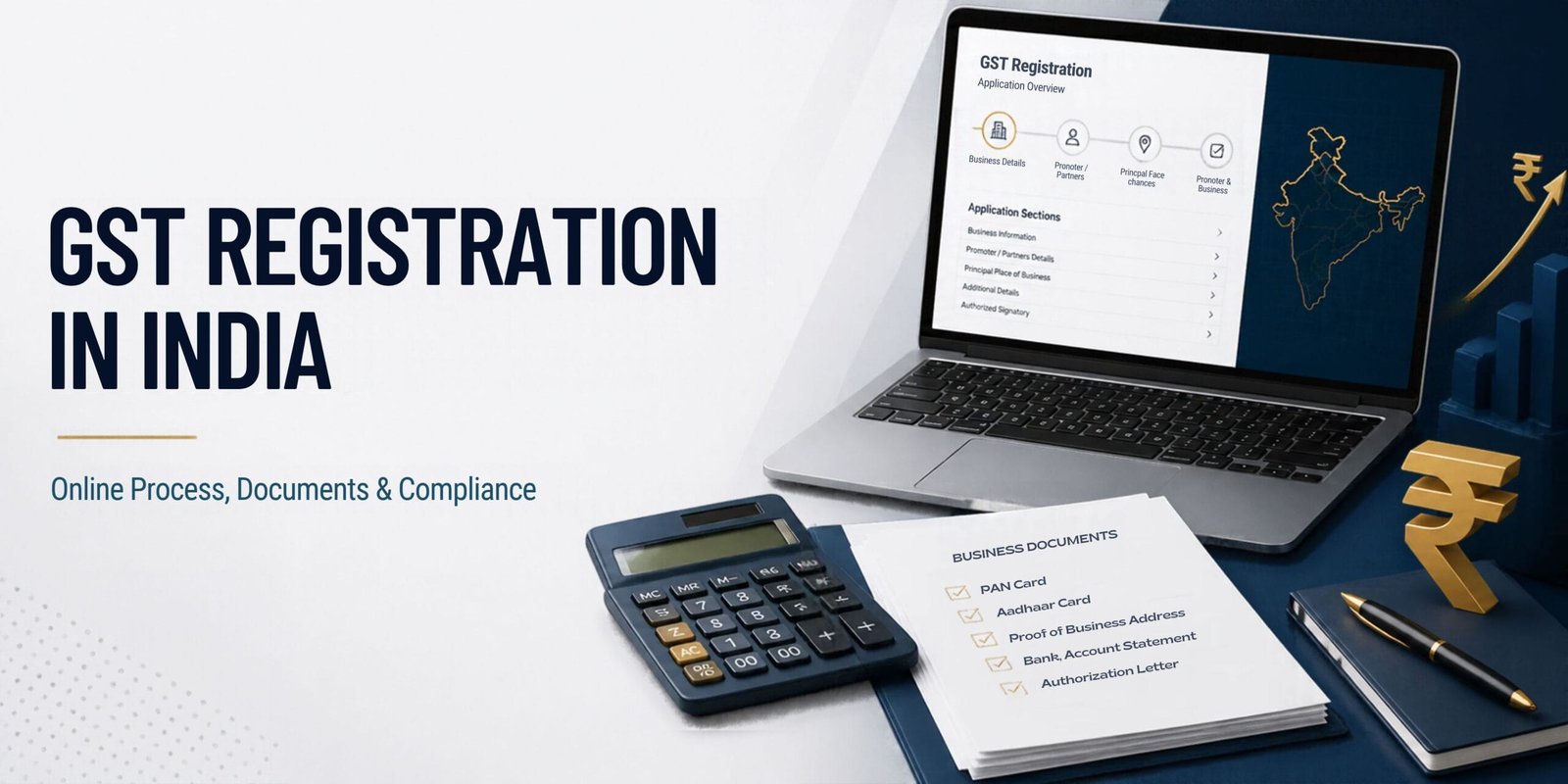
What Is GST Registration in India?
GST registration is the process through which an eligible business registers under India’s Goods and Services Tax regime and receives a Goods and Services Tax Identification Number (GSTIN).
A GSTIN is a unique identification number assigned to a registered taxpayer. Depending on the nature of the business and its activities, registration may bring responsibilities such as issuing compliant tax invoices, maintaining records, filing GST returns, and paying applicable taxes.
Understanding GST Registration & Returns in India helps businesses prepare for their tax responsibilities and maintain appropriate records from the beginning.
Who Needs GST Registration in India?
GST registration requirements depend on factors such as annual aggregate turnover, the type of goods or services supplied, the state or territory in which the business operates, and the nature of its transactions.
A business may need to register if it crosses the applicable turnover threshold or falls within a category for which registration is compulsory under GST law. Different thresholds and conditions may apply to different businesses, locations, and activities.
Some businesses may also choose voluntary registration where permitted. However, voluntary registration generally brings applicable compliance obligations, including return filing.
GST Registration for Small Businesses in India
GST registration for small businesses in India depends on their turnover, business activity, location, and applicable exemptions.
Small businesses, freelancers, service providers, retailers, and online sellers should assess their individual circumstances rather than assume that registration is always mandatory or always optional.
Before applying, consider:
- Your annual aggregate turnover and applicable threshold.
- Whether your business supplies goods, services, or both.
- Whether you sell across state borders or through an e-commerce platform.
- Whether any compulsory-registration provision applies.
- Whether an exemption or special scheme is available for your business.
The applicable rules can differ by business category. Check the current GST provisions or seek professional guidance before deciding whether to register.
Documents Required for GST Registration
Preparing the correct documents before starting your application can help reduce avoidable delays.
Depending on your business structure and circumstances, you may need the following:
1. PAN and Identity Information
PAN details are generally required for the business or proprietor, as applicable. Identity and other prescribed information may also be required for promoters, partners, directors, and authorised signatories.
2. Business Address Proof
You may need documents establishing your principal place of business. Depending on the premises, these could include ownership documents, a rent or lease agreement, a utility bill, or the prescribed consent and supporting documents for premises used with permission.
3. Business and Signatory Details
Prepare your business name, constitution, contact details, bank details where required, and information about the person authorised to submit and verify the application.
4. Additional Supporting Documents
Additional information may be required depending on your business structure, registration category, and the details entered in the application.
Check the current document requirements on the official GST portal before submitting your application.
GST Registration Online India: Step-by-Step Process
The GST registration online India process is conducted through the official GST portal.
Follow these general steps to prepare and submit an application.
Step 1: Check Eligibility and Registration Requirements
Review the applicable GST registration provisions for your turnover, business activity, location, and transaction type. Determine whether registration is compulsory or whether voluntary registration is appropriate.
Step 2: Visit the Official GST Portal
Go to www.gst.gov.in and access the registration section under the Services menu.
Step 3: Enter Your Business Details
Provide the required information, including PAN, legal business name, state or jurisdiction, contact details, and other information requested by the portal.
Step 4: Complete Verification
Complete the prescribed verification process, which may involve an OTP or other verification requirements. Follow the instructions displayed on the portal.
Step 5: Submit the Application and Documents
Enter the relevant business, promoter, authorised-signatory, and address details. Upload the required supporting documents and complete the prescribed verification or authentication steps.
Step 6: Monitor the Application Status
After submission, keep track of your application status and respond to any clarification requests or notices within the applicable deadline. Incorrect information or missing documents can delay processing.
Step 7: Receive Your GSTIN
If the application is approved, the GST registration certificate and GSTIN will be made available through the prescribed process. Review the registration details carefully and ensure that the information is correct.
Important: Processing times and additional verification requirements can vary. Follow the current instructions on the official GST portal.
Common GST Registration Errors to Avoid
Errors in the application can lead to clarification requests, delays, or other complications.
Common issues include:
- Incorrect PAN or business information.
- Inconsistent legal names or business details.
- Incomplete or unsuitable address proof.
- Unclear or missing supporting documents.
- Incorrect authorised-signatory information.
- Failure to monitor the application or respond to a notice.
Review all entries before submission and keep copies of the documents used in your application.
GST Returns and Compliance After Registration
Receiving a GSTIN is only the beginning of your GST responsibilities. Registered businesses must understand the return-filing, invoicing, recordkeeping, and payment obligations that apply to their registration and activities.
Depending on the business and applicable scheme, responsibilities may include:
- Issuing appropriate tax invoices or other prescribed documents.
- Maintaining accurate sales, purchase, and tax records.
- Filing applicable GST returns within the prescribed deadlines.
- Paying tax due, where applicable.
- Updating registration information when relevant details change.
- Monitoring notices and other communications from the tax authorities.
Applicable returns may still need to be filed during periods with no sales. The exact requirements depend on the taxpayer’s registration type and circumstances.
GST Return Filing Services in India
Businesses looking for GST return filing services in India should consider whether their service provider understands their business transactions, applicable return requirements, deadlines, and recordkeeping needs.
Timely and accurate filing can help businesses maintain organised tax records and address compliance obligations more effectively. However, filing requirements vary, so the applicable forms and deadlines should be confirmed for each business.
GST Compliance Services for Business
GST compliance services for business may cover registration support, return-filing assistance, documentation, recordkeeping processes, and guidance on applicable GST obligations.
The level of support required depends on factors such as business size, transaction volume, operating locations, and the nature of supplies. Establishing a consistent compliance process can help businesses manage their responsibilities as operations grow.
How Can a GST Registration Consultant Help?
A professional adviser can help businesses understand registration requirements, prepare documentation, review application details, and identify relevant compliance responsibilities.
Businesses searching for a GST registration consultant in Delhi or elsewhere in India should evaluate the provider’s experience, scope of services, and understanding of the rules applicable to their business.
A GST Registration & Returns consultant may also assist with understanding ongoing filing requirements and maintaining an organised compliance process, depending on the services offered.
Juris Consultants helps businesses understand business setup and regulatory requirements so they can make informed decisions. The support appropriate for your business will depend on your circumstances and the services agreed upon.
Frequently Asked Questions About GST Registration
Is GST registration mandatory for every business in India?
No. The requirement depends on applicable turnover thresholds, business activities, location, exemptions, and compulsory-registration provisions. Businesses should assess their circumstances under current GST law.
Can I apply for GST registration online?
Yes. Eligible applicants can submit their registration application through the official GST portal at www.gst.gov.in.
What documents are required for GST registration?
Common requirements include PAN and identity information, business address proof, business details, and authorised-signatory information. Additional documents may be required depending on the applicant’s circumstances.
Is GST registration necessary for small businesses?
Not necessarily. GST registration for small businesses in India depends on applicable thresholds, business activities, and other legal requirements. Some businesses may qualify for exemptions, while others may be required to register.
Do I need to file GST returns if my business has no sales?
You may still need to file applicable returns even when there are no sales. The requirements depend on your registration type and the applicable rules.
Can a GST registration consultant help with returns?
A GST Registration & Returns consultant may provide registration assistance and ongoing return-filing support, depending on the agreed scope of services. Businesses should confirm the services offered and applicable compliance responsibilities.
Final Thoughts
Understanding the GST registration process in India can help businesses prepare the right documents, determine their registration obligations, and plan for ongoing compliance.
From applying through the official portal to managing applicable GST returns, a clear process can help businesses stay organised and make informed decisions.
For official information and current registration requirements, visit the GST portal. For guidance on business setup and regulatory requirements, contact Juris Consultants to discuss the support appropriate for your business.