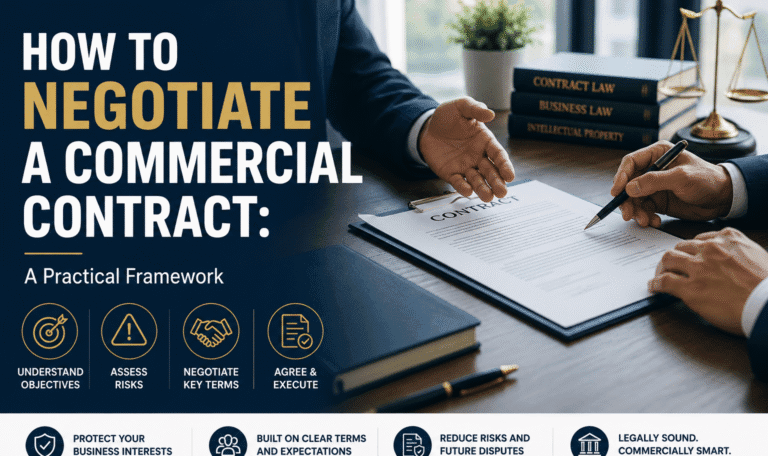

Most contract disputes begin during negotiation, not when someone drafts the final document. A term may seem acceptable during a meeting, only to create confusion months later when both parties read the contract differently. This makes commercial contract negotiation an important part of every business relationship. Whether you are negotiating a vendor agreement, a shareholders’ agreement, or a service contract, the negotiation stage can protect your business interests and reduce future disputes. A strong negotiation does more than settle the price. It defines responsibilities, manages risk, protects important business information, and sets clear expectations for both parties. This guide explains how to negotiate a commercial contract, which clauses deserve close attention, common negotiation challenges, and when professional contract drafting support can help. What Is Commercial Contract Negotiation and Why Does It Matter? Commercial contract negotiation is the process of discussing and agreeing on the terms of a business relationship before signing an agreement. These terms may include: Businesses should not treat negotiation as a formality. The final contract controls the relationship after signing. A verbal understanding may not provide the same clarity as a properly written agreement. For businesses in India, contracts also operate within the broader legal framework, including the Indian Contract Act, 1872 and other laws that may apply to a particular transaction or industry. The Indian Contract Act covers areas such as contractual obligations, performance, breach, indemnity, and guarantees. Read the Indian Contract Act, 1872 on India Code. The risks also vary by contract type. A manufacturing supply agreement may require detailed delivery and quality terms, while a software services agreement may need stronger provisions for intellectual property, data, and confidentiality. A Practical Commercial Contract Negotiation Process A structured process can make contract negotiations faster and more effective. 1. Define the Business Objectives Before discussing individual clauses, understand what the agreement needs to achieve. For example, a business negotiating a vendor agreement should identify: Starting with business objectives helps both parties focus on the commercial relationship instead of debating contract language without context. 2. Identify Risks and Negotiation Priorities Every commercial contract carries some level of risk. The goal is not to remove every risk. Instead, businesses should identify which risks they can accept and which risks require protection. Prioritize clauses that could create significant financial or operational exposure. For example, a business may consider these terms high priority: A contract drafting professional can help identify risks that may not be obvious during a first review. 3. Draft Clear and Practical Terms Once the priorities are clear, the contract should reflect them in simple and specific language. Avoid vague statements such as: “The supplier will deliver the products promptly.” Instead, the agreement should define the expected delivery timeline, acceptable delays, responsibilities, and consequences for missed deadlines. Clear drafting reduces the chance that both parties interpret the same clause differently. 4. Negotiate the Key Clauses This is where most of the commercial contract negotiation takes place. Both parties may exchange drafts, redlines, comments, and counteroffers. Not every clause deserves the same level of attention. Strong negotiators separate important issues from minor ones. For example, a business may be willing to accept a minor wording change if the other party agrees to a more important change in liability or termination rights. The objective is not to win every point. The objective is to reach terms that protect the business while keeping the transaction commercially workable. 5. Complete the Final Review Before signing, compare the final version with the terms agreed during negotiation. Check: A final review can prevent a negotiated term from being accidentally changed or removed during the redlining process. After signing, businesses should also track important obligations, renewal dates, payments, and deliverables. Important Clauses to Review During Commercial Contract Negotiation Some clauses deserve particular attention because they can have a direct impact on a business’s financial and legal exposure. Payment Terms and Commercial Obligations Payment clauses should clearly state: If payments depend on milestones or deliverables, the agreement should define those milestones clearly. For example, instead of stating that payment is due “after completion,” specify what constitutes completion and when the payment becomes due. Confidentiality and Data Protection Confidentiality clauses should clearly explain what information the parties must protect. They may cover: The contract should also explain how long confidentiality obligations continue and whether any exceptions apply. Where personal data is involved, businesses should also consider the data protection requirements that apply to the transaction. Liability and Indemnity Liability and indemnity provisions determine who bears the financial consequences when something goes wrong. Potential issues may include: Businesses should pay close attention to liability caps. An apparently standard liability clause can create significant exposure if the cap is too high, too low, or does not apply to certain categories of claims. Termination and Dispute Resolution A contract should explain how either party can end the relationship. Termination provisions may cover: Dispute resolution provisions are equally important. The contract should establish how disputes will be handled and may specify negotiation, mediation, arbitration, or litigation. It should also address governing law and jurisdiction where appropriate. These provisions may seem unimportant when the relationship is going well. They become much more important when the parties disagree. Common Challenges in Commercial Contract Negotiation Businesses often face similar problems during negotiations. 1. One-Sided Standard Terms A larger company may provide its standard contract and expect the other party to accept it without major changes. Businesses should not assume that a standard clause is automatically fair or appropriate for their transaction. 2. Unclear Priorities Negotiations can become slow when neither side knows which terms matter most. Before starting negotiations, identify the clauses that are essential, negotiable, and acceptable. 3. Verbal Promises That Never Reach the Contract A salesperson or business representative may promise a particular service level, discount, delivery date, or other benefit during discussions. If the promise does not appear in the final agreement, it may create confusion later. Important commercial commitments should appear clearly in the written contract. 4. Generic Templates..