
As a business grows, keeping up with statutory requirements and corporate records can become challenging. Missing documents, delayed filings or incomplete meeting records may create compliance issues if they are not addressed on time.
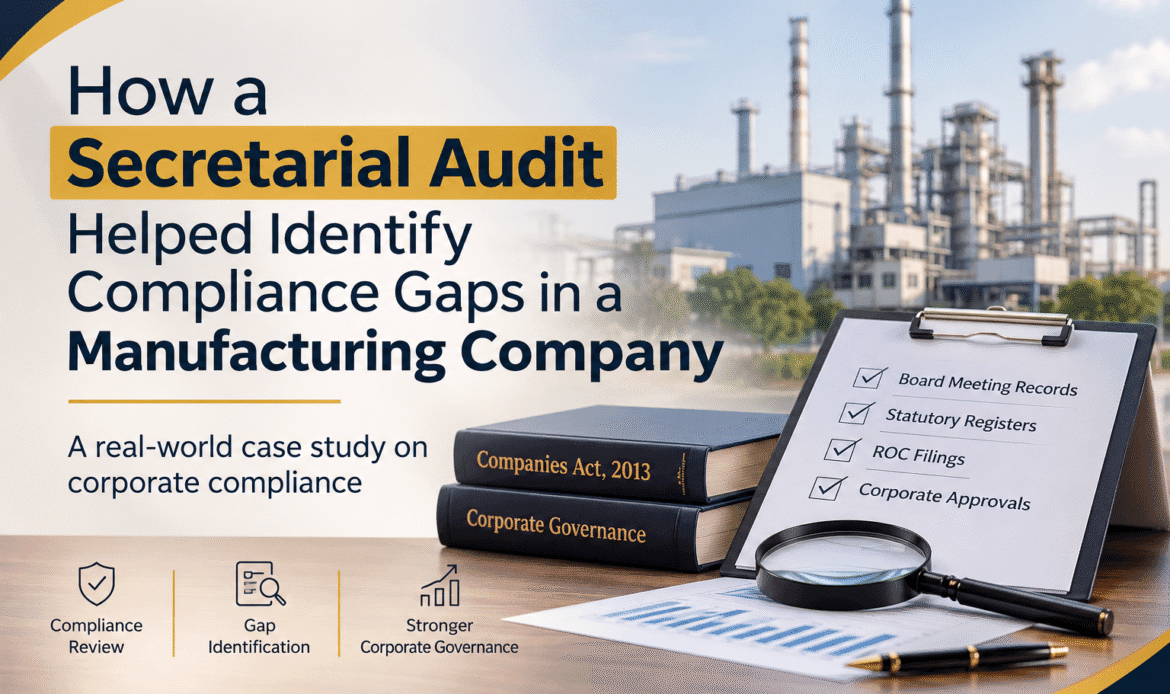
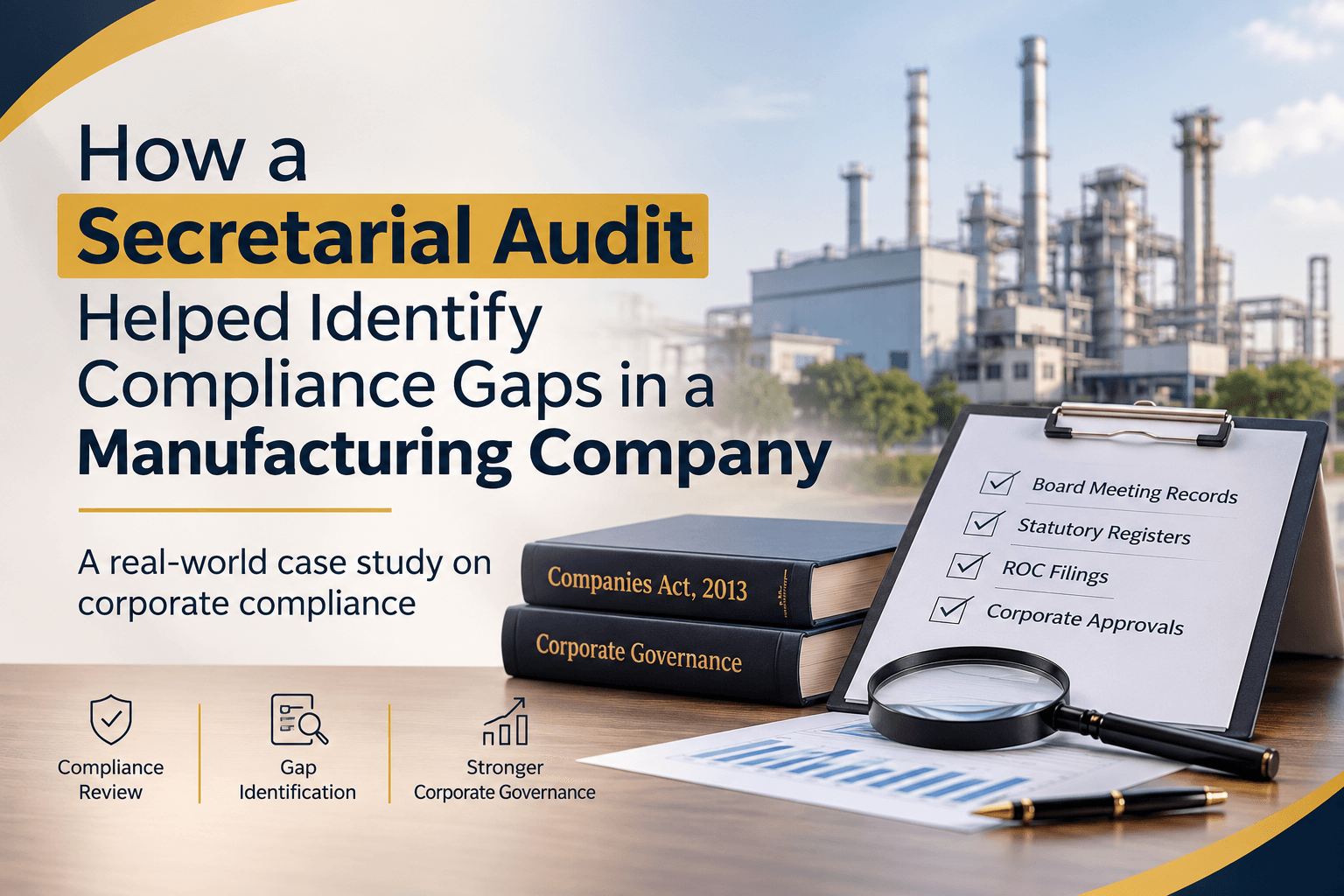
This case study explains how a secretarial audit helped identify compliance gaps in a growing Indian manufacturing company.
1. Company Background
A medium-sized Indian manufacturing company with an annual turnover of over ₹150 crore had expanded its operations over the years.
However, during an internal review, management noticed gaps in maintaining statutory records and completing certain corporate compliance requirements.
The main concerns included:
- Incomplete records of board meetings.
- Delays in updating statutory registers.
- Pending or delayed ROC filings.
- Missing documents supporting certain corporate decisions.
To understand these issues, the company decided to review its secretarial records and applicable compliance requirements.
2. What Did the Secretarial Audit Identify?
The audit focused on reviewing corporate records, meeting documents, statutory registers and regulatory filings.
A. Board and General Meeting Records
The review identified incomplete meeting minutes, missing supporting documents and gaps in records relating to certain board and shareholder decisions.
B. Statutory Registers
Some statutory registers were not updated on time. Certain director-related and shareholding records also required verification.
C. ROC Filings
The review highlighted delays in certain regulatory filings and differences between information maintained internally and details submitted to the Registrar of Companies.
These observations showed that the company needed better documentation and a more organised compliance process.
3. Key Audit Observations
| Area Reviewed | Gaps Identified |
| Meeting Records | Incomplete minutes and supporting documents |
| Statutory Registers | Delayed updates and inconsistent records |
| ROC Filings | Filing delays and information mismatches |
| Corporate Approvals | Missing supporting documentation |
The review helped management understand where its compliance processes needed improvement.
4. Recommended Improvements
To address these gaps, the company was advised to:
- Maintain proper records of board and general meetings.
- Update statutory registers regularly.
- Track ROC filing deadlines through a compliance calendar.
- Keep supporting documents for important corporate decisions.
- Conduct periodic reviews of applicable statutory requirements.
These steps could help the company improve its record-keeping and avoid similar compliance gaps in the future.
5. How Juris Consultants Helps Businesses
Corporate compliance is not just about filing forms. It also involves maintaining proper records and following the procedures required under applicable laws.
Juris Consultants supports businesses through its secretarial and corporate compliance services, including:
- Secretarial Audit: Reviewing corporate records and applicable statutory compliance.
- Corporate Law Compliance: Supporting compliance with the Companies Act, 2013.
- Statutory Records: Assistance with maintaining and reviewing corporate records.
- ROC Compliance: Support with applicable regulatory filings and documentation.
- Corporate Governance: Helping businesses improve their compliance and documentation practices.
Through these services, Juris Consultants helps businesses maintain organised corporate records and manage their compliance responsibilities.
Conclusion
As businesses grow, keeping corporate records updated and meeting statutory requirements becomes increasingly important.
A secretarial audit helps identify gaps in compliance and highlights areas that need attention. Addressing these issues on time can help businesses maintain better records and strengthen corporate governance.
Frequently Asked Questions
1. What is a secretarial audit?
A secretarial audit reviews a company’s compliance with applicable corporate laws, rules and regulations.
2. Which companies require a secretarial audit?
Certain prescribed categories of companies are required to conduct a secretarial audit under Section 204 of the Companies Act, 2013.
3. What is checked during a secretarial audit?
It may include board meeting records, statutory registers, ROC filings, resolutions and other relevant corporate documents.
4. How does a secretarial audit help a company?
It helps identify compliance gaps, improve record-keeping and highlight areas where corporate procedures need attention.
5. Is a secretarial audit the same as a financial audit?
No. A secretarial audit focuses on corporate law compliance, while a statutory financial audit examines the company’s financial statements.
Disclaimer: This case study is a hypothetical example prepared for educational and informational purposes. The company profile, circumstances and audit observations do not represent an actual client engagement or audit conducted by Juris Consultants. The content should not be considered legal or professional advice. Actual audit scope and compliance requirements depend on the company’s circumstances and applicable laws and regulations.