

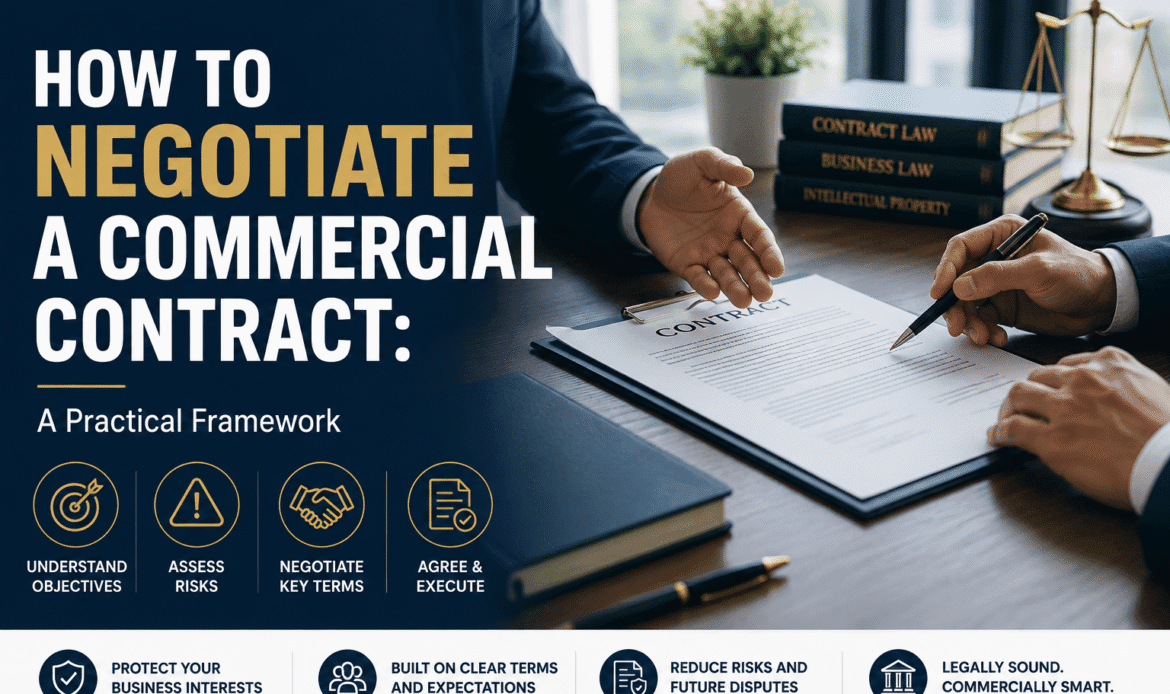
Most contract disputes begin during negotiation, not when someone drafts the final document. A term may seem acceptable during a meeting, only to create confusion months later when both parties read the contract differently.
This makes commercial contract negotiation an important part of every business relationship. Whether you are negotiating a vendor agreement, a shareholders’ agreement, or a service contract, the negotiation stage can protect your business interests and reduce future disputes.
A strong negotiation does more than settle the price. It defines responsibilities, manages risk, protects important business information, and sets clear expectations for both parties.
This guide explains how to negotiate a commercial contract, which clauses deserve close attention, common negotiation challenges, and when professional contract drafting support can help.
What Is Commercial Contract Negotiation and Why Does It Matter?
Commercial contract negotiation is the process of discussing and agreeing on the terms of a business relationship before signing an agreement.
These terms may include:
- Pricing and payment terms
- Deliverables and timelines
- Responsibilities of each party
- Confidentiality requirements
- Liability and indemnity
- Termination rights
- Dispute resolution
- Governing law and jurisdiction
Businesses should not treat negotiation as a formality. The final contract controls the relationship after signing. A verbal understanding may not provide the same clarity as a properly written agreement.
For businesses in India, contracts also operate within the broader legal framework, including the Indian Contract Act, 1872 and other laws that may apply to a particular transaction or industry. The Indian Contract Act covers areas such as contractual obligations, performance, breach, indemnity, and guarantees. Read the Indian Contract Act, 1872 on India Code.
The risks also vary by contract type. A manufacturing supply agreement may require detailed delivery and quality terms, while a software services agreement may need stronger provisions for intellectual property, data, and confidentiality.
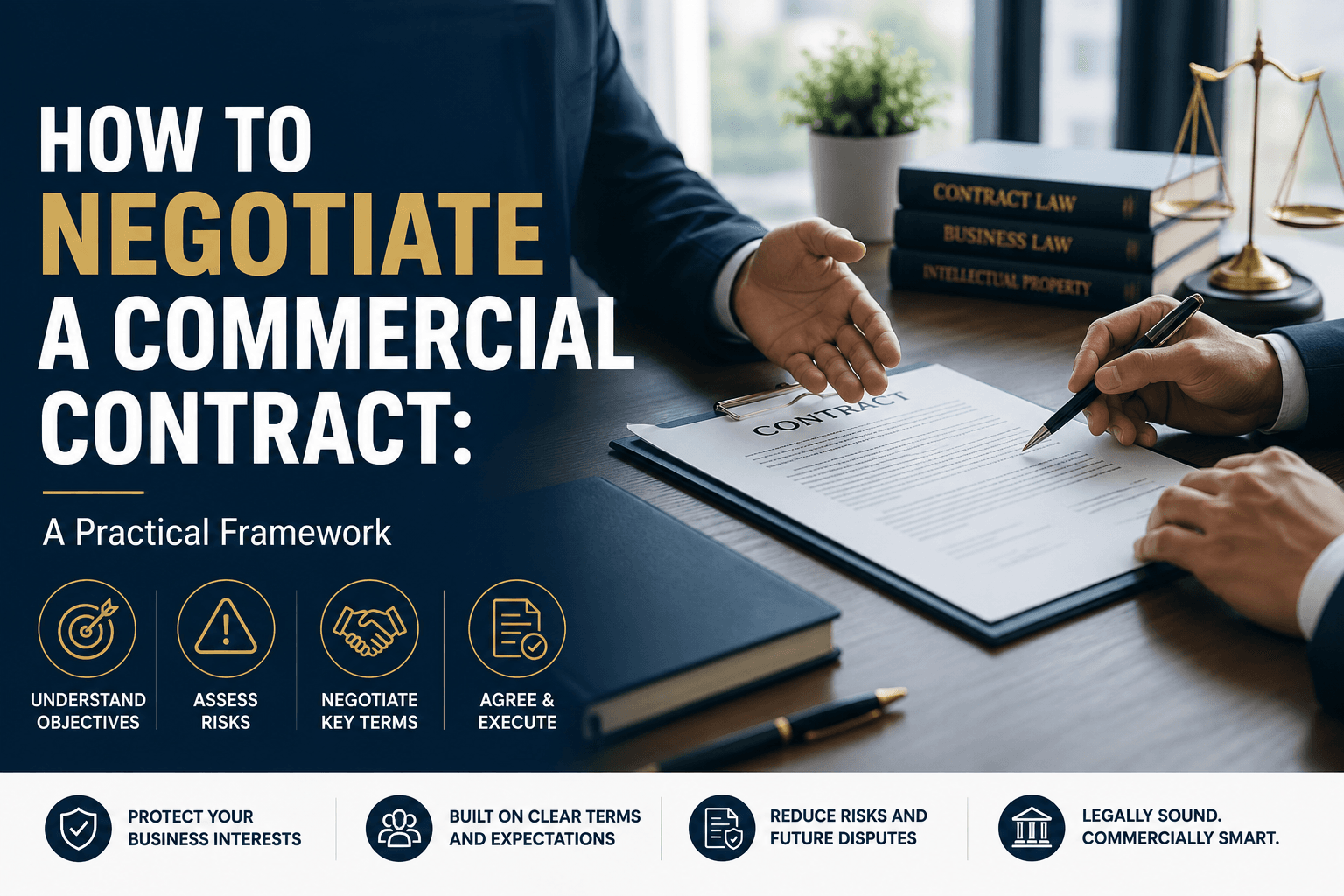
A Practical Commercial Contract Negotiation Process
A structured process can make contract negotiations faster and more effective.
1. Define the Business Objectives
Before discussing individual clauses, understand what the agreement needs to achieve.
For example, a business negotiating a vendor agreement should identify:
- Expected order volume
- Quality standards
- Delivery requirements
- Payment terms
- Service levels
- Flexibility to change order volumes
- Exit requirements
Starting with business objectives helps both parties focus on the commercial relationship instead of debating contract language without context.
2. Identify Risks and Negotiation Priorities
Every commercial contract carries some level of risk.
The goal is not to remove every risk. Instead, businesses should identify which risks they can accept and which risks require protection.
Prioritize clauses that could create significant financial or operational exposure.
For example, a business may consider these terms high priority:
- Unlimited liability
- Broad indemnity obligations
- Automatic renewals
- Long payment periods
- Strict termination restrictions
- Unclear deliverables
- Broad confidentiality obligations
- Unfavorable dispute resolution terms
A contract drafting professional can help identify risks that may not be obvious during a first review.
3. Draft Clear and Practical Terms
Once the priorities are clear, the contract should reflect them in simple and specific language.
Avoid vague statements such as:
“The supplier will deliver the products promptly.”
Instead, the agreement should define the expected delivery timeline, acceptable delays, responsibilities, and consequences for missed deadlines.
Clear drafting reduces the chance that both parties interpret the same clause differently.
4. Negotiate the Key Clauses
This is where most of the commercial contract negotiation takes place.
Both parties may exchange drafts, redlines, comments, and counteroffers. Not every clause deserves the same level of attention.
Strong negotiators separate important issues from minor ones.
For example, a business may be willing to accept a minor wording change if the other party agrees to a more important change in liability or termination rights.
The objective is not to win every point. The objective is to reach terms that protect the business while keeping the transaction commercially workable.
5. Complete the Final Review
Before signing, compare the final version with the terms agreed during negotiation.
Check:
- Pricing
- Payment dates
- Deliverables
- Timelines
- Liability limits
- Indemnity
- Confidentiality
- Termination
- Dispute resolution
- Governing law
- Renewal terms
A final review can prevent a negotiated term from being accidentally changed or removed during the redlining process.
After signing, businesses should also track important obligations, renewal dates, payments, and deliverables.
Important Clauses to Review During Commercial Contract Negotiation
Some clauses deserve particular attention because they can have a direct impact on a business’s financial and legal exposure.
Payment Terms and Commercial Obligations
Payment clauses should clearly state:
- Total contract value
- Payment schedule
- Due dates
- Payment method
- Milestone conditions
- Late payment consequences
- Currency for international transactions
If payments depend on milestones or deliverables, the agreement should define those milestones clearly.
For example, instead of stating that payment is due “after completion,” specify what constitutes completion and when the payment becomes due.
Confidentiality and Data Protection
Confidentiality clauses should clearly explain what information the parties must protect.
They may cover:
- Business information
- Customer information
- Financial information
- Trade secrets
- Technical information
- Intellectual property
- Business strategies
The contract should also explain how long confidentiality obligations continue and whether any exceptions apply.
Where personal data is involved, businesses should also consider the data protection requirements that apply to the transaction.
Liability and Indemnity
Liability and indemnity provisions determine who bears the financial consequences when something goes wrong.
Potential issues may include:
- Product defects
- Missed deadlines
- Third-party claims
- Breach of contract
- Data-related incidents
- Intellectual property claims
Businesses should pay close attention to liability caps.
An apparently standard liability clause can create significant exposure if the cap is too high, too low, or does not apply to certain categories of claims.
Termination and Dispute Resolution
A contract should explain how either party can end the relationship.
Termination provisions may cover:
- Termination for convenience
- Termination for breach
- Notice periods
- Cure periods
- Insolvency
- Material breach
- Obligations after termination
Dispute resolution provisions are equally important.
The contract should establish how disputes will be handled and may specify negotiation, mediation, arbitration, or litigation.
It should also address governing law and jurisdiction where appropriate.
These provisions may seem unimportant when the relationship is going well. They become much more important when the parties disagree.
Common Challenges in Commercial Contract Negotiation
Businesses often face similar problems during negotiations.
1. One-Sided Standard Terms
A larger company may provide its standard contract and expect the other party to accept it without major changes.
Businesses should not assume that a standard clause is automatically fair or appropriate for their transaction.
2. Unclear Priorities
Negotiations can become slow when neither side knows which terms matter most.
Before starting negotiations, identify the clauses that are essential, negotiable, and acceptable.
3. Verbal Promises That Never Reach the Contract
A salesperson or business representative may promise a particular service level, discount, delivery date, or other benefit during discussions.
If the promise does not appear in the final agreement, it may create confusion later.
Important commercial commitments should appear clearly in the written contract.
4. Generic Templates
Templates can provide a starting point, but they may not reflect the specific transaction.
A contract should match the actual business relationship, applicable laws, industry requirements, and risk profile.
5. Unequal Negotiating Power
Small businesses may have limited leverage when negotiating with a large customer, supplier, or corporate counterparty.
In such cases, businesses should focus their negotiating effort on the provisions that could create the greatest financial or operational risk.
Why Small Businesses in India Need Professional Contract Drafting Support
Small businesses often manage several types of agreements at the same time.
These may include:
- Vendor agreements
- Service agreements
- Employment contracts
- Shareholders’ agreements
- Non-disclosure agreements
- Distribution agreements
- Software licensing agreements
Without dedicated legal support, it can be difficult to identify risks before signing.
A generic online template may not account for the commercial terms of a particular deal or the legal requirements that apply to the business.
Professional contract drafting and negotiation support can help businesses review agreements, identify risks, improve contract language, and negotiate important provisions.
Juris Consultants provides Contract Drafting & Negotiation services covering commercial agreements, distribution agreements, employment contracts, joint venture agreements, manufacturing and supply agreements, service agreements, software licensing agreements, and other business contracts. Explore Juris Consultants’ Contract Drafting & Negotiation practice area.
How Contract Drafting Consultants Help Businesses
A contract drafting consultant can bring structure to the negotiation process.
Depending on the agreement, professional support may include:
- Reviewing the other party’s draft
- Identifying legal and commercial risks
- Reviewing key clauses
- Suggesting alternative wording
- Preparing redlines
- Supporting negotiations
- Clarifying business obligations
- Reviewing the final agreement before signing
For vendor relationships, the review may focus on delivery requirements, quality standards, payment triggers, warranties, liability, and termination rights.
For shareholders’ agreements, the focus may include ownership, decision-making, transfer restrictions, exit provisions, and dispute mechanisms.
The right approach depends on the type of contract and the commercial objectives of the parties.
Frequently Asked Questions About Commercial Contract Negotiation
What is included in professional contract drafting services in India?
Professional contract drafting services may include reviewing commercial terms, identifying legal and financial risks, drafting or reviewing agreement language, and supporting negotiations.
The exact scope depends on the contract and the business’s requirements.
How long does commercial contract negotiation take?
There is no fixed timeline.
A straightforward vendor or service agreement may take a few weeks. More complex transactions can take longer because they may involve several rounds of negotiation and multiple connected clauses.
The timeline also depends on how quickly both parties respond and resolve outstanding issues.
Why is a shareholders’ agreement important for Indian startups?
A shareholders’ agreement can define how founders and investors make decisions, manage ownership changes, and address disagreements.
Clear terms can reduce uncertainty as the company grows and can provide a framework for handling issues such as exits and decision-making rights.
What should a business look for in vendor agreement drafting services?
Businesses should look for support that addresses the actual commercial relationship.
Important areas may include:
- Delivery timelines
- Quality standards
- Performance requirements
- Payment terms
- Warranties
- Liability
- Termination rights
- Dispute resolution
The agreement should reflect the specific transaction rather than rely entirely on a generic template.
Do small businesses need contract drafting support, or can they use templates?
Templates can work for simple, low-risk arrangements.
However, commercial contracts often involve issues such as payment structures, liability, confidentiality, termination, intellectual property, and dispute resolution.
Professional review can help identify risks that a generic template may not address.
Conclusion
Commercial contract negotiation is not about winning every point.
It is about creating an agreement that reflects the actual business deal and allocates risk in a way both parties can understand and manage.
A structured approach helps businesses identify their objectives, prioritize risks, negotiate important clauses, and confirm that the final document reflects what they agreed.
Businesses should also remember that contract management does not end when the agreement is signed. Payment dates, deliverables, renewal periods, and contractual obligations should continue to receive attention throughout the relationship.
For businesses without in-house legal capacity, professional contract drafting and negotiation support can provide valuable assistance before a contract is signed and before a small gap becomes a costly dispute.
Planning to negotiate a commercial contract? Professional review can help you identify risks before you sign.